Uncovering Jesus’ Footprint: A Groundbreaking Discovery in Chorazin
Discover the astonishing discovery of a potential first-century structure beneath a third-century synagogue in Chorazin, Israel. This groundbreaking find could reshape our understanding of Jesus’ life and the early Christian era.

Peeling back the layers of a long-forgotten cake is similar to archaeology in that sometimes what you uncover is stale, and other times it’s a delightful surprise. Archaeologists have discovered what may be the cherry on top in the ancient city of Chorazin in northern Israel: evidence of a building that dates back to the time of Jesus. Indeed, this finding was found directly underneath the floor of a synagogue dating back to the third century. History aficionados, fasten your seatbelts because what is about to unfold might completely change the course of biblical history.
- Archaeologists found a structure beneath a third-century synagogue in Chorazin.
- The discovered structure might date back to the time of Jesus.
- This find could confirm biblical accounts of Jesus’ ministry in Chorazin.
- The discovery could revolutionize biblical archaeology and early Christianity studies.
- Further research is needed to fully understand the significance of the find.
A Walk Through Chorazin’s Dusty Streets
Imagine yourself in the shoes of Jesus, strolling around Chorazin. The New Testament claims that when Jesus came to this ancient city, he preached, healed the sick, and worked wonders. It sounds like something from a movie, don’t you think? The surprise is that Jesus wasn’t particularly fond of the people in the area. Matthew 11:21 and Luke 10:13 state that when Chorazin saw His miracles, He condemned it for its lack of repentance. “Woe to you, Chorazin!” He said. Not every day does the Messiah Himself personally chastise a city.
To bolster these biblical stories, archaeologists have been searching the region for years in the hopes of finding proof of a first-century temple at Chorazin. However, a synagogue from the third century was the oldest building they could locate. That is, until archaeologists discovered something in 2022 that may or may not be amazing.

Digging Deeper: The Discovery Beneath the Synagogue
Imagine this: As you gently chisel away at the floor of a centuries-old synagogue, you unexpectedly come across something substantial in your work as an archaeologist. But rather than discovering additional synagogue floor, you discover large stones that are hundreds of years older than the synagogue. It seems like something from an Indiana Jones film, don’t you think?
Achia Cohen-Tavor and his group from Dagesh Tourist Archaeology experienced just this. These old rocks, arranged as though to shout, “Hey, look beneath me!” were discovered by the excavators of the third-century Chorazin synagogue. What they discovered could have been around in the first century, just around the period when Jesus is said to have been through Chorazin.
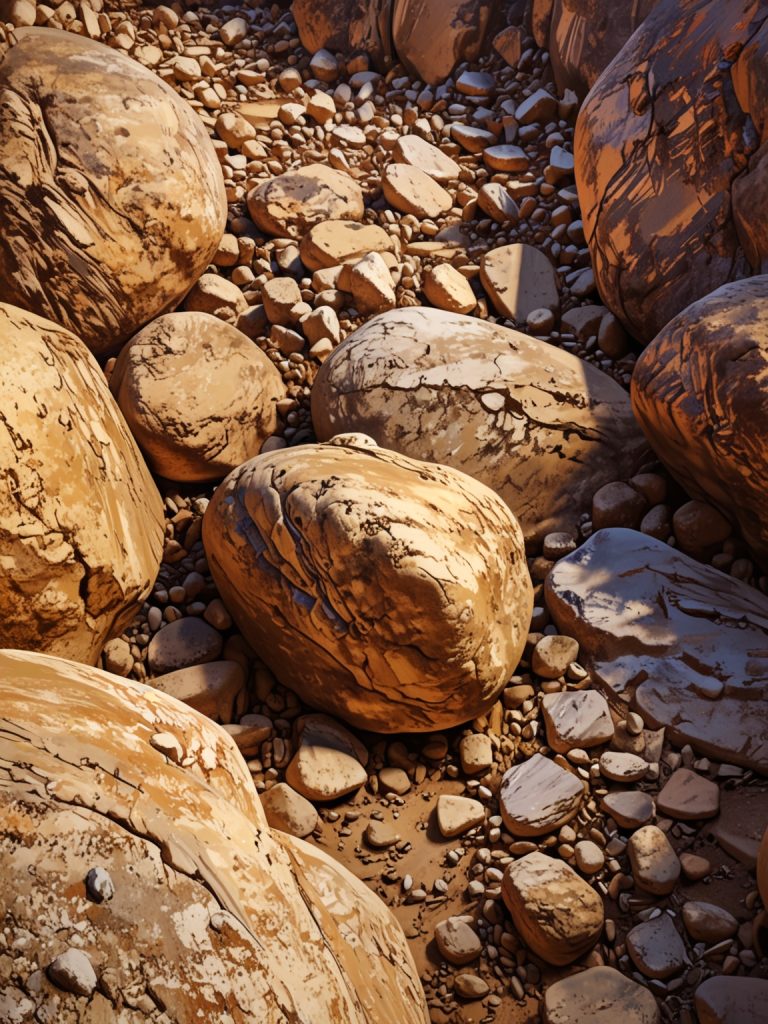
Among the boulders, they discovered pottery and coins—artefacts that could provide crucial dating information. “I can’t date the rock itself when it was put here,” Cohen-Tavor explained, “But I can date the pottery and, hopefully, coins coming from between the rocks and definitely what’s beneath them.” In other words, these items could serve as a time machine, giving us a glimpse into the exact period when these stones were laid down.
The Old Synagogue and Its Christian Significance
You may be asking yourself, “What’s the big deal about these boulders?” at this point. If these artifacts are from the first century, then this might be the first concrete proof that there was a temple in Chorazin while Jesus lived there. That’s correct, this finding may provide evidence that Jesus spoke and worked miracles at the precise location where these stones currently rest, in addition to his tour to Chorazin.
This isn’t simply a fascinating historical anecdote for Christians; it may also validate one of the most important turning points in their faith. For centuries, the synagogue from the third century has had significance for archaeologists and religious researchers alike. It was constructed from basalt stones and included Jewish patterns. But the idea of an even older building underneath it gives this already hallowed place an additional level of significance.

My Take on the Discovery
Let’s now talk about ourselves in more detail. The timing of this finding is somewhat comical, I must admit. It seems as though the old stones were still hiding from us after all these years of hunting. Oh, you believed you had discovered everything? They appear to be saying, “Think again.” And what better moment to make such a discovery than right now, when archaeological techniques and technology have developed to the point that it is possible to thoroughly evaluate these discoveries?
Let’s not, however, get carried away. It’s vital to keep in mind that, despite the excitement around this discovery, archaeology frequently revolves around raising the correct questions rather than providing conclusive answers. Any broad conclusions must first be carefully examined in light of the artifacts discovered among the stones. But if these artifacts really come from the first century, they could offer an essential piece of the jigsaw for comprehending the life of the historical Jesus.
A Potential Game-Changer for Biblical Archaeology
If confirmed, this finding may have important ramifications for the study of early Christianity and biblical archaeology. Academics have been debating the veracity of the historical narratives in the Bible—especially those about the life and work of Jesus—for a long time. Discovering proof of a first-century building in Chorazin would give these stories the much-needed credibility they deserve and possibly allay some of the doubters.
Furthermore, this finding could provide insight into the day-to-day activities of the Chorazin residents during the time of Jesus. Among the stones were found pottery, coins, and other artifacts that may provide information about their economics, religion, and culture. Put differently, this isn’t only about locating a structure; it’s also about discovering a long-forgotten way of existence.
What’s Next for Chorazin?
So, what are our next steps? So, Cohen-Tavor and his group will need to carry out more excavation and study. They will use the most recent scientific methods to age the artifacts as precisely as feasible. Further discoveries at Chorazin and other ancient locations listed in the Bible may become possible if the results verify that these artifacts are from the first century.
Nevertheless, this finding has already reignited interest in the historic city of Chorazin, regardless of the conclusion. It acts as a reminder that history is never completely written down—there is always more to find out, understand, and investigate. Who knows? Perhaps the next big archeological find is waiting to be discovered a few feet below the surface, just needing someone to delve a little bit farther.
A Final Thought
While we wait for further information, it’s important to consider the relevance of this finding. The process of unearthing these old stones serves as a potent reminder of our connection to the past, regardless of whether it turns out to be the location where Jesus taught. It demonstrates to us that history is continually being written, one discovery at a time, and is not only something that happened thousands of years ago.
So let’s keep our minds open and our shovels ready. Ultimately, history has an odd habit of taking us by surprise when we least expect it to. Who knows? Perhaps in the future, this event will be seen as a turning point in our understanding of faith and history.