

Genesis 8:1-5 NIV
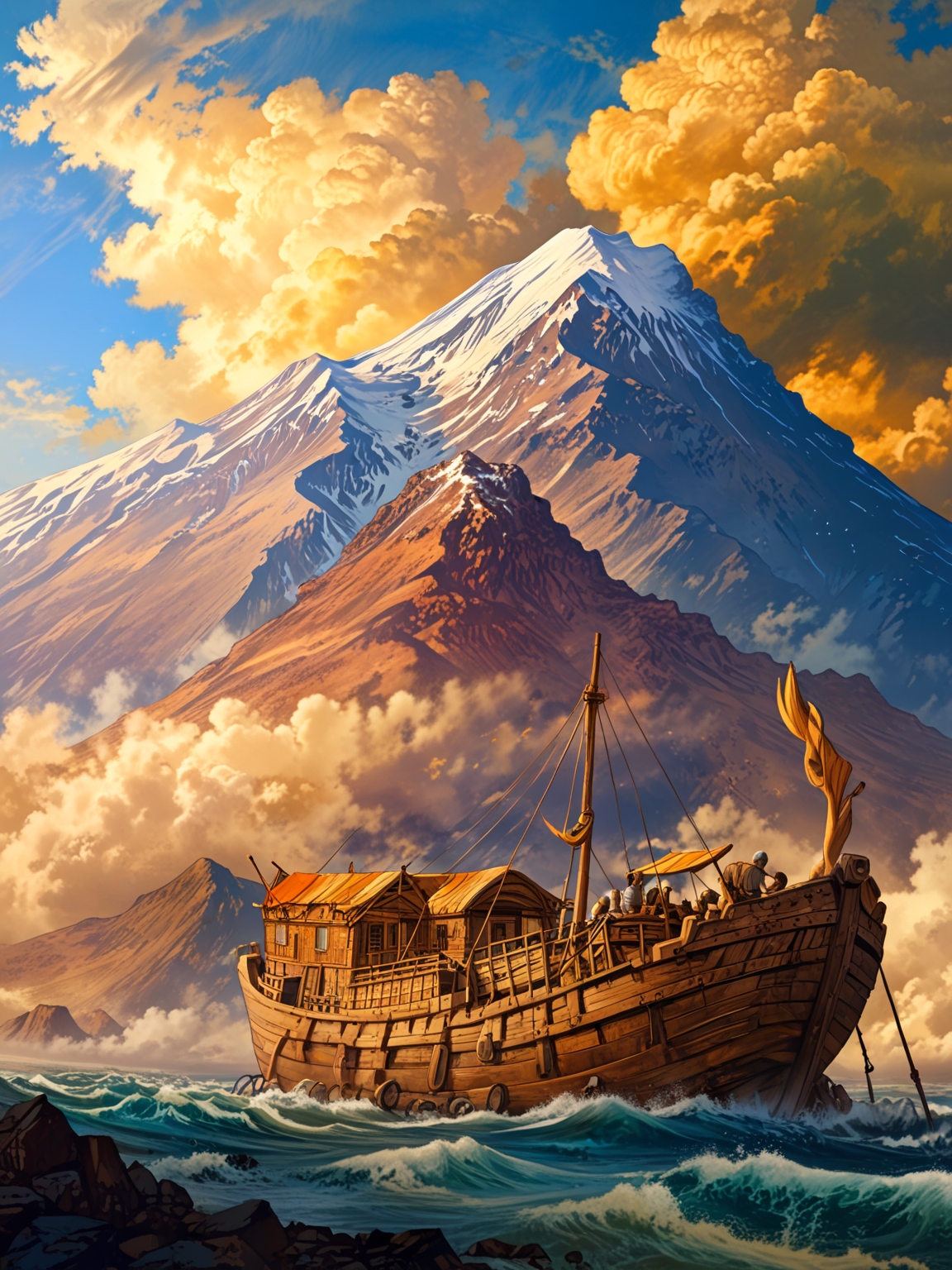
But God remembered Noah and all the wild animals and the livestock that were with him in the ark, and he sent a wind over the earth, and the waters receded. Now the springs of the deep and the floodgates of the heavens had been closed, and the rain had stopped falling from the sky. The water receded steadily from the earth. At the end of the hundred and fifty days the water had gone down, and on the seventeenth day of the seventh month the ark came to rest on the mountains of Ararat. The waters continued to recede until the tenth month, and on the first day of the tenth month the tops of the mountains became visible.
Genesis 8:1-5 NIV
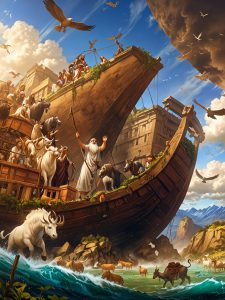
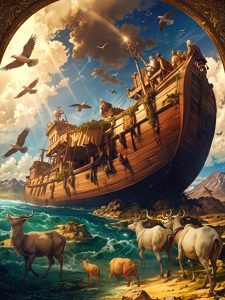
Verse 1: “But God remembered Noah and all the wild animals and the livestock that were with him in the ark…”
Here’s a powerful reminder of God’s faithfulness. Even though it had been raining for a long time, God had not forgotten about Noah and the animals he had protected. It’s comforting to know that God maintains His promises, don’t you agree?
Verse 2: “Now the springs of the deep and the floodgates of the heavens had been closed, and the rain had stopped falling from the sky.”
This verse describes a turning point. The downpour has finally ceased! The phrase “springs of the deep” may allude to underground water sources that contributed to the flood. The “floodgates of the heavens” is a lyrical way of stating the rain has stopped. It’s as if God Himself turned off the faucet.
Verse 3: “The water receded steadily from the earth. At the end of the hundred and fifty days the water had gone down.”
Imagine how relieved Noah must have felt! The floodwaters were no longer an inexorable force. They were slowly but steadily fading away. A hundred and fifty days is a long period, yet God was faithfully restoring things to normal.
Verse 4: “And on the seventeenth day of the seventh month the ark came to rest on the mountains of Ararat.”
This text provides a particular date: the 17th day of the seventh month. It tells us that the ark finally landed on the Ararat mountain range.
Verse 5: “The waters continued to recede until the tenth month, and on the first day of the tenth month the tops of the mountains became visible.”
The floodwaters continued to recede for several months. On the first day of the tenth month, the first evidence of dry land appeared: mountain peaks! This line conveys the grandeur of the flood and the long process by which the world dries out.
Genesis 8:6-12 NIV
After forty days Noah opened a window he had made in the ark and sent out a raven, and it kept flying back and forth until the water had dried up from the earth. Then he sent out a dove to see if the water had receded from the surface of the ground. But the dove could find nowhere to perch because there was water over all the surface of the earth; so it returned to Noah in the ark. He reached out his hand and took the dove and brought it back to himself in the ark. He waited seven more days and again sent out the dove from the ark. When the dove returned to him in the evening, there in its beak was a freshly plucked olive leaf! Then Noah knew that the water had receded from the earth. He waited seven more days and sent the dove out again, but this time it did not return to him.
Genesis 8:6-12 NIV
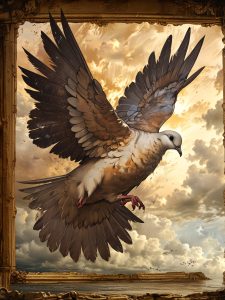
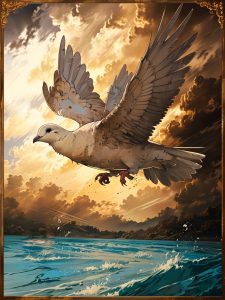
We left off with the ark resting on Mount Ararat and the water gradually draining. Now things become exciting!
Verse 6: “After forty days Noah opened a window he had made in the ark…”
Forty days is an important number in the Bible, frequently representing a period of waiting or trial. Noah is waiting for a sign that the world is ready for them again.
Verse 7: “…and sent out a raven, and it kept flying back and forth until the water had dried up from the earth.”
Ravens are scavengers, so Noah sends one out to scout. It wouldn’t necessarily land, but it could fly high and check for dry land. The raven’s repeated appearance indicates that there had been little progress.
Verse 8: “Then he sent out a dove to see if the water had receded from the surface of the ground.”
In contrast, doves require land to rest. So Noah sends out a dove, thinking it’ll find a place to perch.
Verse 9: “But the dove could find nowhere to perch because there was water over all the surface of the earth; so it returned to Noah in the ark. He reached out his hand and took the dove and brought it back to himself in the ark.”
Unfortunately, the dove does not find any dry land and returns to the ark. This must have been discouraging for Noah, yet he refuses to lose hope.
Verse 10: “He waited seven more days and again sent out the dove from the ark.”
Noah waits another seven days, representing patience and God’s perfection. Then he tries again with the dove.
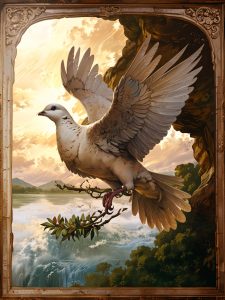
Verse 11: “When the dove returned to him in the evening, there in its beak was a freshly plucked olive leaf! Then Noah knew that the water had receded from the earth.”
This is a turning point! The dove returns carrying a sign of life: a fresh olive leaf! Olive branches are commonly used as symbols of peace and new beginnings. This tells Noah that the worst has passed and the planet is beginning to heal.
Verse 12: “He waited seven more days and sent the dove out again, but this time it did not return to him.”
After another period of waiting, Noah releases the dove one final time. This time, the dove doesn’t return. Why? Because it has found a home! The soil is dry enough for the dove to settle and start a new life.
Genesis 8:13-19 NIV
By the first day of the first month of Noah’s six hundred and first year, the water had dried up from the earth. Noah then removed the covering from the ark and saw that the surface of the ground was dry. By the twenty-seventh day of the second month the earth was completely dry.
Then God said to Noah, “Come out of the ark, you and your wife and your sons and their wives. Bring out every kind of living creature that is with you—the birds, the animals, and all the creatures that move along the ground—so they can multiply on the earth and be fruitful and increase in number on it.”
So Noah came out, together with his sons and his wife and his sons’ wives. All the animals and all the creatures that move along the ground and all the birds—everything that moves on land—came out of the ark, one kind after another.
Genesis 8:13-19 NIV
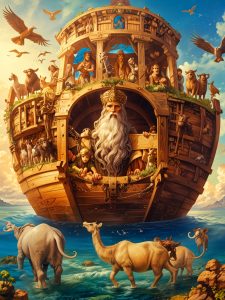
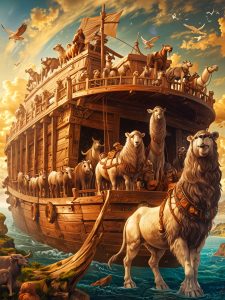
Let’s take a look at this exciting part of the story where things finally start coming together for Noah.
Verse 13: “By the first day of the first month of Noah’s six hundred and first year, the water had dried up from the earth. Noah then removed the covering from the ark and saw that the surface of the ground was dry.”
Imagine how relieved Noah must have been after all that time! This verse tells us exactly when things started to look up. After a year since the floods began, the earth was finally dry enough to walk on. Noah must have wanted to see what the world looked like.
Verse 14: “By the twenty-seventh day of the second month the earth was completely dry.”
This verse adds much additional details. The drying process took a while, but on the 27th day of the second month, the earth was entirely dry. Can you imaging the excitement Noah and his family must be feeling?
Verse 15: “Then God said to Noah…”
Now comes the moment we have all been waiting for! After a long delay, God speaks to Noah again. This is a great reminder that God is always faithful to His promises.
Verse 16: “…Come out of the ark, you and your wife and your sons and their wives.”
God offers Noah the long-awaited instruction: abandon the ark! This must have been a happy occasion for Noah and his family. Consider everything they had gone through – the terror, the uncertainty – and now they were finally free.
Verse 17: “Bring out every kind of living creature that is with you—the birds, the animals, and all the creatures that move along the ground—so they can multiply on the earth and be fruitful and increase in number on it.”
God doesn’t simply tell Noah to depart. He gives him a mission: to repopulate the earth with all of the creatures they had preserved. This is evidence of God’s ongoing love and concern for creation.
Verse 18 & 19: “So Noah came out, together with his sons and his wife and his sons’ wives. All the animals and all the creatures that move along the ground and all the birds—everything that moves on land—came out of the ark, one kind after another.”
Finally, the big time arrives! Noah and his family, together with all of the preserved creatures, exit the ark and return to land. This is a striking image of a new beginning, an opportunity to start over.
Genesis 8:20-22 NIV
Then Noah built an altar to the Lord and, taking some of all the clean animals and clean birds, he sacrificed burnt offerings on it. The Lord smelled the pleasing aroma and said in his heart: “Never again will I curse the ground because of humans, even though every inclination of the human heart is evil from childhood. And never again will I destroy all living creatures, as I have done.
“As long as the earth endures,
seedtime and harvest,
cold and heat,
summer and winter,
day and night
will never cease.”
Genesis 8:20-22 NIV
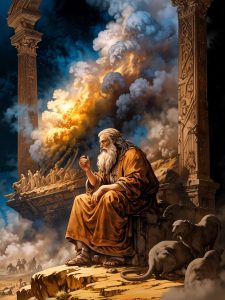
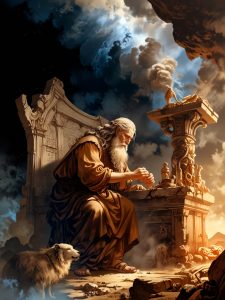
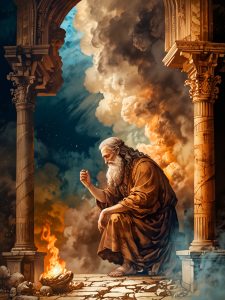
Verse 20: “Then Noah built an altar to the Lord and, taking some of all the clean animals and clean birds, he sacrificed burnt offerings on it.”
This depicts Noah’s expression of devotion and thankfulness. He constructs an altar, a place of sacrifice, and presents to God some of the creatures that have been preserved. This burnt sacrifice was a popular way for individuals to express gratitude and dedication back then.
Verse 21: “The Lord smelled the pleasing aroma and said in his heart: “Never again will I curse the ground because of humans, even though every inclination of the human heart is evil from childhood. And never again will I destroy all living creatures, as I have done.”
God’s reaction is powerful and full of love. The “pleasing aroma” is not meant to be physical, but rather to represent Noah’s earnest contribution. God acknowledges humanity’s continual challenges – “every inclination of the human heart is evil from childhood” – but He prefers forgiveness and a fresh start. He swears never again to ruin all of creation with a flood.
Verse 22: “As long as the earth endures, seedtime and harvest, cold and heat, summer and winter, day and night will never cease.”
This verse expresses a magnificent promise of God’s constancy. He maintains the natural order and rhythm of existence – seasons, day and night – as a sign of His everlasting bond with humanity. Even though there will be obstacles, God promises that the planet will continue to support life.
The Bible is filled with wonderful stories that can touch our hearts and inspire us. Why not read some other chapters and discover what stunning photographs AI can produce? Perhaps you’ll uncover a passage that speaks to you in a fresh manner.
The Bible is a gift, and technological advancements have provided us with new methods to interact with its timeless message. So the next time you have a quiet moment, grab your Bible and see where it leads you. Who knows, you might find a hidden treasure or a new angle on an old story.
Of course, if you have any questions or want to discuss anything you’re reading, my door is always open!


