

Genesis 21:1-7 NIV
Now the Lord was gracious to Sarah as he had said, and the Lord did for Sarah what he had promised. Sarah became pregnant and bore a son to Abraham in his old age, at the very time God had promised him. Abraham gave the name Isaac to the son Sarah bore him. When his son Isaac was eight days old, Abraham circumcised him, as God commanded him. Abraham was a hundred years old when his son Isaac was born to him.
Sarah said, “God has brought me laughter, and everyone who hears about this will laugh with me.” And she added, “Who would have said to Abraham that Sarah would nurse children? Yet I have borne him a son in his old age.”
Genesis 21:1-7 NIV
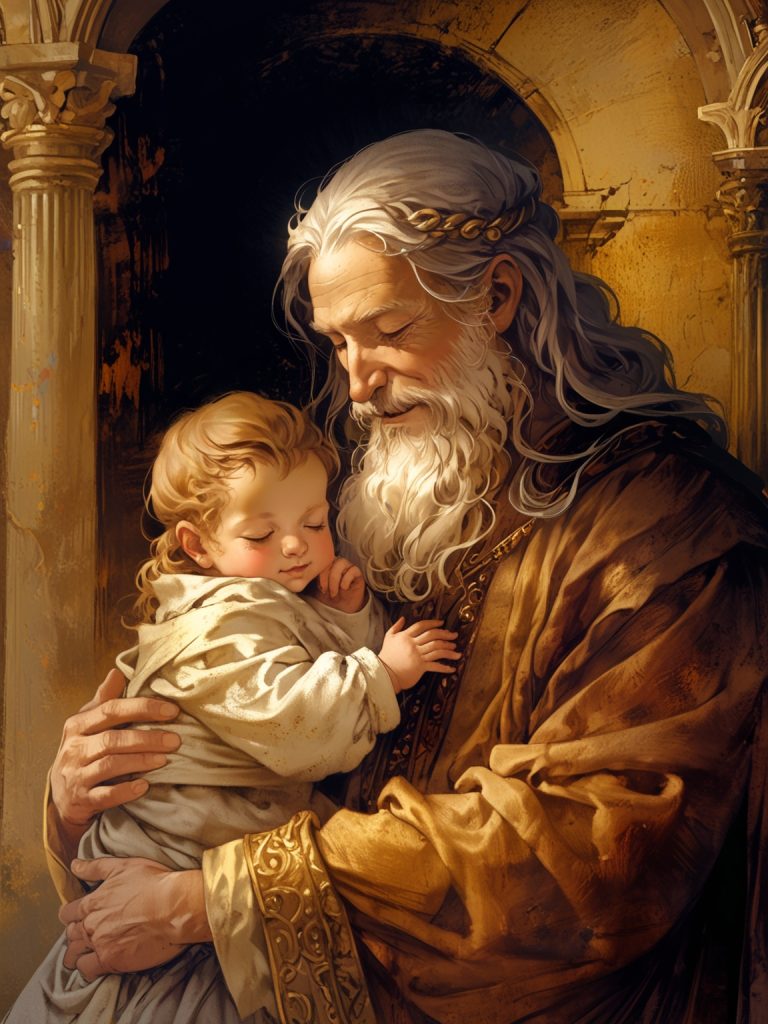
Verse 1: “Now the Lord was gracious to Sarah as he had said, and the Lord did for Sarah what he had promised.”
Here we see the faithfulness of God in action. Despite Sarah’s old age and long years of waiting, God remains true to His promise. He had promised Abraham and Sarah that they would have a child, and now, in His grace, God fulfills that promise. This sets the stage for a miraculous birth that is central to God’s covenant with Abraham.
Verse 2: “Sarah became pregnant and bore a son to Abraham in his old age, at the very time God had promised him.”
This verse emphasizes the miraculous nature of Isaac’s birth. Sarah conceives and gives birth to a son, Isaac, exactly as God had foretold. This event not only demonstrates God’s power to overcome human limitations but also underscores His faithfulness to His word.
Verse 3: “Abraham gave the name Isaac to the son Sarah bore him.”
The name “Isaac” means “laughter.” It signifies the joy and laughter that filled Sarah’s heart upon receiving this long-awaited child. Isaac’s name serves as a reminder of the miraculous circumstances of his birth and the fulfillment of God’s promise to Abraham and Sarah.
Verse 4: “When his son Isaac was eight days old, Abraham circumcised him, as God commanded him.”
Abraham obediently follows God’s command to circumcise Isaac on the eighth day, in accordance with the covenant God made with Abraham (Genesis 17:9-14). This act signifies Isaac’s inclusion in God’s covenant with Abraham, marking him as a descendant through whom God’s promises would continue.
Verse 5: “Abraham was a hundred years old when his son Isaac was born to him.”
This verse highlights Abraham’s advanced age at the time of Isaac’s birth, emphasizing the miraculous nature of this event. Despite their physical limitations, God’s promise of descendants as numerous as the stars in the sky (Genesis 15:5) begins to unfold through Isaac.
Verse 6: “Sarah said, ‘God has brought me laughter, and everyone who hears about this will laugh with me.'”
Sarah’s response to Isaac’s birth is one of overwhelming joy and gratitude. She recognizes that God’s faithfulness has brought her unexpected joy and fulfillment in her old age. Her laughter reflects a deep sense of awe at God’s ability to fulfill His promises beyond human understanding.
Verse 7: “And she added, ‘Who would have said to Abraham that Sarah would nurse children? Yet I have borne him a son in his old age.'”
Sarah marvels at the improbability of her bearing a child in her old age. She acknowledges the incredulity of such a promise coming true, highlighting God’s power to do the impossible and His faithfulness to His covenant promises.
This passage from Genesis 21 reveals God’s faithfulness, His power to fulfill His promises, and the joy that comes from trusting in His timing. It also foreshadows the larger narrative of God’s covenant with Abraham and the eventual fulfillment of His promises through Isaac’s descendants, ultimately pointing forward to the ultimate fulfillment of God’s promises in Jesus Christ.
Genesis 21:8-13 NIV
The child grew and was weaned, and on the day Isaac was weaned Abraham held a great feast. But Sarah saw that the son whom Hagar the Egyptian had borne to Abraham was mocking, and she said to Abraham, “Get rid of that slave woman and her son, for that woman’s son will never share in the inheritance with my son Isaac.”
The matter distressed Abraham greatly because it concerned his son. But God said to him, “Do not be so distressed about the boy and your slave woman. Listen to whatever Sarah tells you, because it is through Isaac that your offspring will be reckoned. I will make the son of the slave into a nation also, because he is your offspring.”
Genesis 21:8-13 NIV
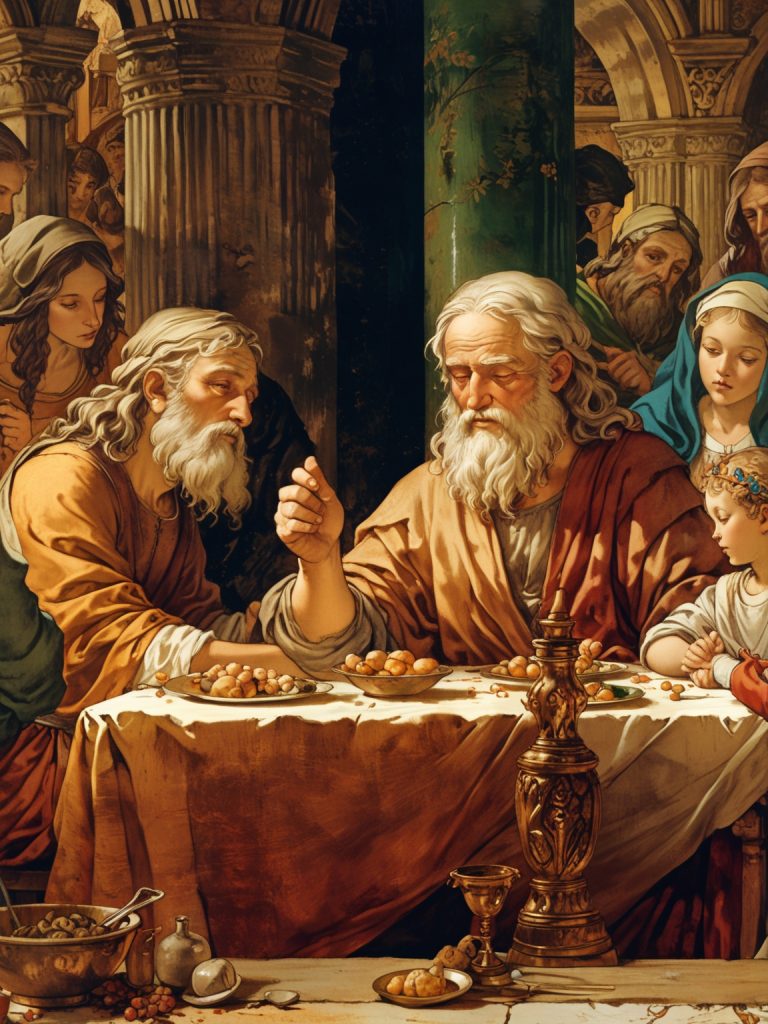
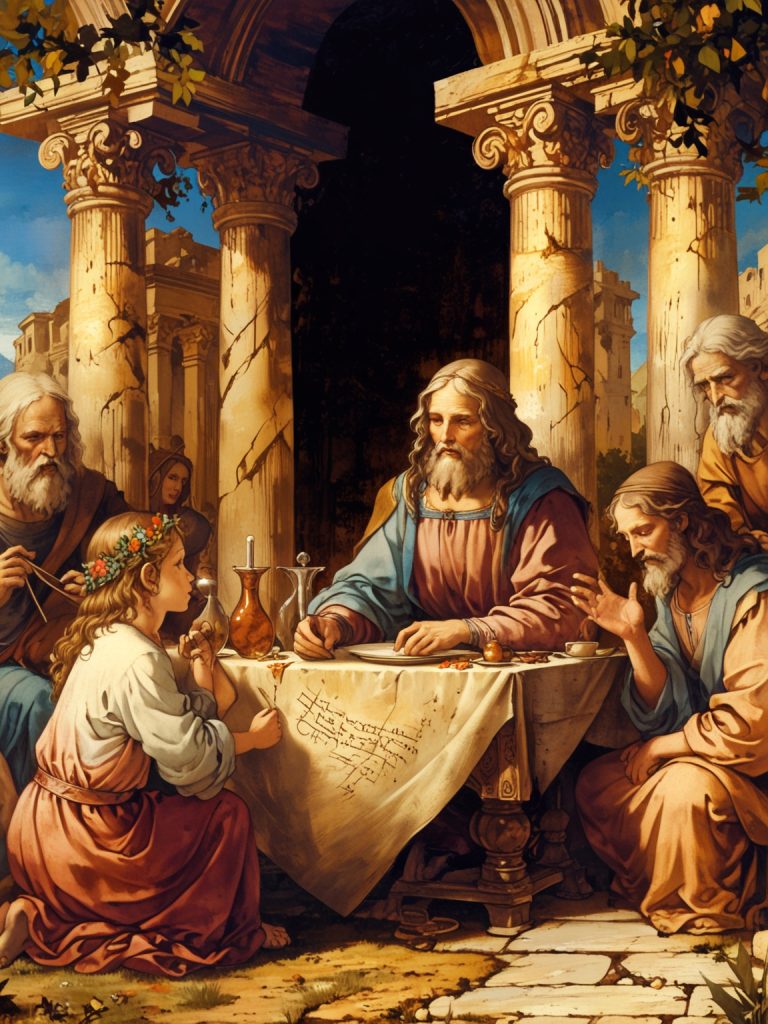
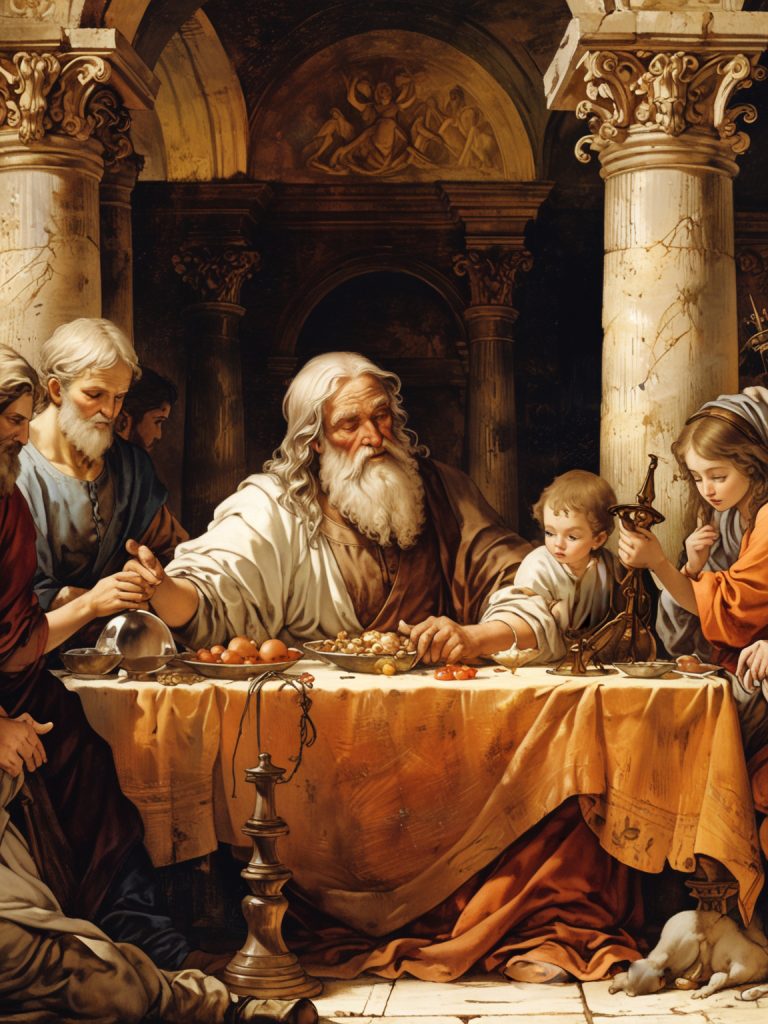
Verse 8: “The child grew and was weaned, and on the day Isaac was weaned Abraham held a great feast.”
After Isaac is weaned1, which was a significant milestone in ancient times, Abraham celebrates with a feast. This event marks Isaac’s transition from infancy to early childhood and is a joyous occasion for the family.
Verse 9: “But Sarah saw that the son whom Hagar the Egyptian had borne to Abraham was mocking,”
During the feast, Sarah notices Ishmael, the son of Hagar, mocking Isaac. This incident likely stirred feelings of concern and perhaps jealousy in Sarah, especially regarding Isaac’s status as the promised child of Abraham.
Verse 10: “and she said to Abraham, ‘Get rid of that slave woman and her son, for that woman’s son will never share in the inheritance with my son Isaac.'”
Sarah’s reaction is one of protective concern for Isaac’s inheritance rights. She requests Abraham to send away Hagar and Ishmael, fearing that Ishmael’s presence might jeopardize Isaac’s position as Abraham’s rightful heir.
Verse 11: “The matter distressed Abraham greatly because it concerned his son.”
Abraham is deeply troubled by Sarah’s demand because he cares for both Ishmael and Isaac. The situation weighs heavily on him as it involves his children and the difficult decision to send away Hagar and Ishmael.
Verse 12: “But God said to him, ‘Do not be so distressed about the boy and your slave woman. Listen to whatever Sarah tells you, because it is through Isaac that your offspring will be reckoned.'”
God reassures Abraham, instructing him to heed Sarah’s request. God emphasizes that His covenant and promise will continue through Isaac, not Ishmael, affirming Isaac as the chosen son through whom Abraham’s descendants will be blessed.
Verse 13: “I will make the son of the slave into a nation also, because he is your offspring.”
God assures Abraham that Ishmael, too, will be blessed and become the father of a great nation. Despite being sent away, God promises to care for Ishmael and fulfill His plans for him.
This passage reveals the complexities of human relationships and the unfolding of God’s divine plan. It illustrates Sarah’s concern for Isaac’s inheritance and Abraham’s emotional struggle with the situation. Through it all, God demonstrates His sovereignty, assuring His promises will be fulfilled through Isaac while also blessing Ishmael separately. It teaches us about God’s faithfulness, His compassion for all His children, and His ability to work through challenging family dynamics for His ultimate purposes.
wean1 /wiːn/
past tense: weaned; past participle: weaned
- accustom (an infant or other young mammal) to food other than its mother’s milk.
- accustom (someone) to managing without something which they have become dependent on.”the doctor tried to wean her off the sleeping pills”
- be strongly influenced by (something), especially from an early age.”I was weaned on a regular diet of Hollywood fantasy”
Genesis 21:14-16 NIV
Early the next morning Abraham took some food and a skin of water and gave them to Hagar. He set them on her shoulders and then sent her off with the boy. She went on her way and wandered in the Desert of Beersheba.
When the water in the skin was gone, she put the boy under one of the bushes. Then she went off and sat down about a bowshot away, for she thought, “I cannot watch the boy die.” And as she sat there, she began to sob.
Genesis 21:14-16 NIV
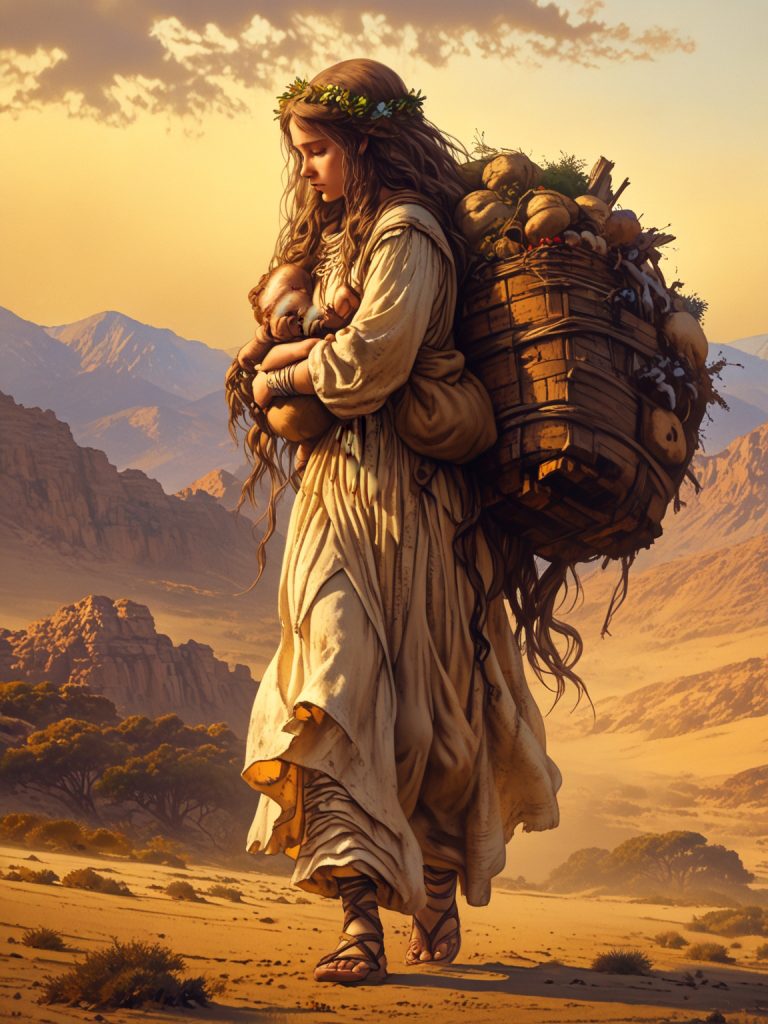
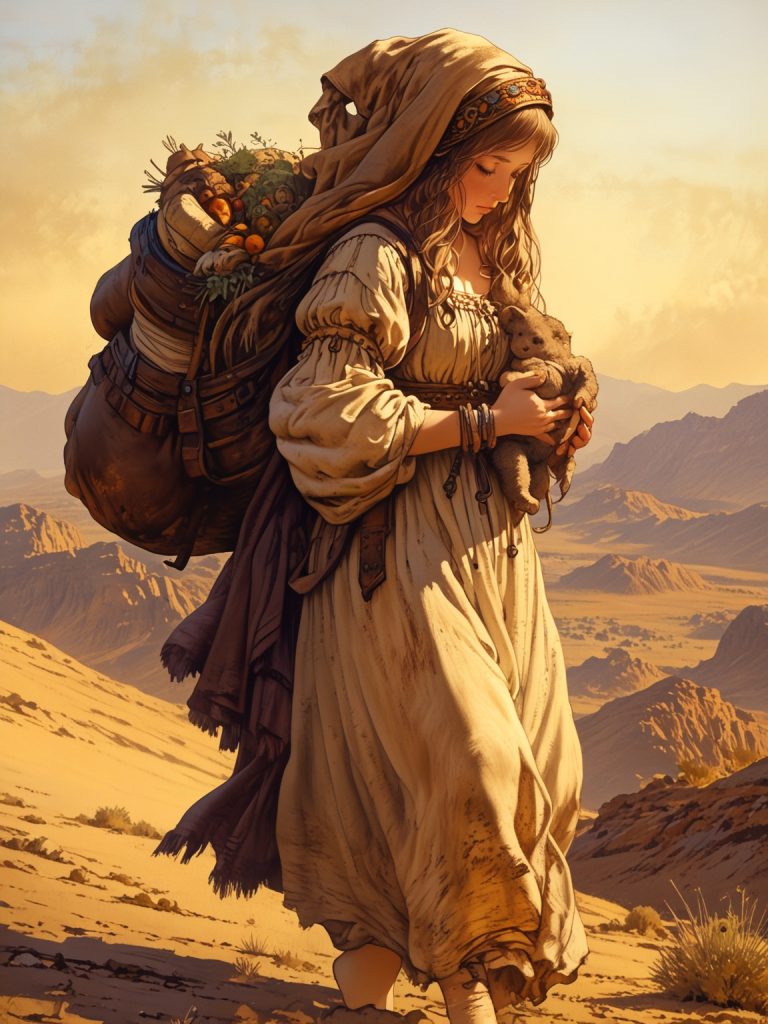
Verse 14: “Early the next morning Abraham took some food and a skin of water and gave them to Hagar. He set them on her shoulders and then sent her off with the boy. She went on her way and wandered in the Desert of Beersheba.”
In this verse, we witness Abraham’s difficult decision to send Hagar and Ishmael away, following Sarah’s request. Despite his anguish, Abraham ensures they have provisions—food and water—to sustain them on their journey. Hagar obediently sets out into the desert, facing an uncertain future in obedience to Abraham’s directive.
Verse 15: “When the water in the skin was gone, she put the boy under one of the bushes.”
As Hagar and Ishmael journey through the harsh desert terrain, their water supply runs out. Faced with the imminent threat of dehydration, Hagar makes a heartbreaking choice: to shelter Ishmael under a bush, shielding him from the scorching sun and hoping for a miraculous provision in this desperate moment.
Verse 16: “Then she went off and sat down about a bowshot away, for she thought, ‘I cannot watch the boy die.’ And as she sat there, she began to sob.”
Here, we glimpse Hagar’s profound anguish and helplessness. Unable to bear witnessing her son’s suffering, she retreats to a distance and weeps. Her tears reflect the depth of a mother’s love and the anguish of feeling abandoned in the wilderness. Yet, in this moment of despair, God hears her cries and intervenes to provide for them.
This passage reveals the human drama of abandonment and desperation, but it also highlights God’s compassion and provision in the midst of dire circumstances. It teaches us about the complexities of faith, obedience, and the unwavering care of God, who remains faithful even in the wilderness of our lives.
Genesis 21:17-21 NIV
God heard the boy crying, and the angel of God called to Hagar from heaven and said to her, “What is the matter, Hagar? Do not be afraid; God has heard the boy crying as he lies there. Lift the boy up and take him by the hand, for I will make him into a great nation.”
Then God opened her eyes and she saw a well of water. So she went and filled the skin with water and gave the boy a drink.
God was with the boy as he grew up. He lived in the desert and became an archer. While he was living in the Desert of Paran, his mother got a wife for him from Egypt.
Genesis 21:17-21 NIV
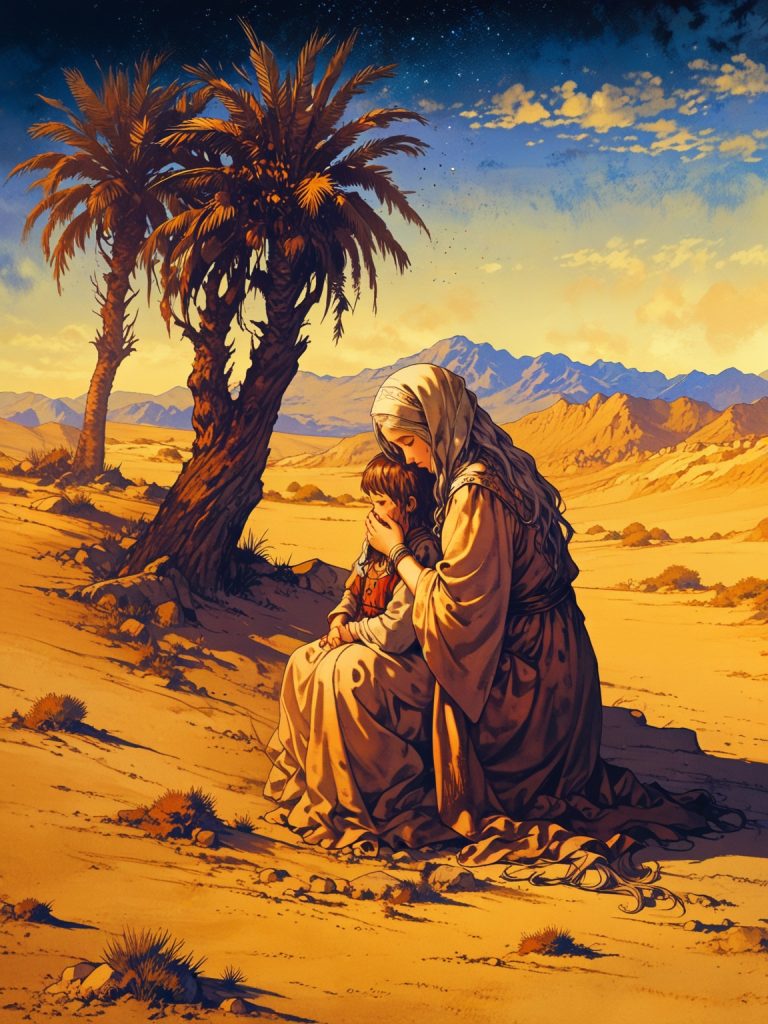
Verse 17: “God heard the boy crying, and the angel of God called to Hagar from heaven and said to her, ‘What is the matter, Hagar? Do not be afraid; God has heard the boy crying as he lies there.'”
In this verse, we see God’s immediate response to Ishmael’s distress. God hears the boy’s cries, demonstrating His attentive care and compassion. The angel of God speaks to Hagar from heaven, comforting her and reassuring her not to fear. This divine intervention emphasizes that God is aware of their plight and is actively involved in their situation.
Verse 18: “‘Lift the boy up and take him by the hand, for I will make him into a great nation.'”
The angel gives Hagar specific instructions to lift Ishmael and take him by the hand. This action symbolizes a renewal of hope and strength. God’s promise to make Ishmael into a great nation reassures Hagar of Ishmael’s future significance and God’s overarching plan for him, despite their current dire circumstances.
Verse 19: “Then God opened her eyes and she saw a well of water. So she went and filled the skin with water and gave the boy a drink.”
In this moment, God provides for Hagar and Ishmael’s immediate needs by opening Hagar’s eyes to a nearby well. This miraculous provision of water symbolizes God’s sustaining care and ability to provide life-giving resources in the most desperate situations. Hagar’s action of filling the skin with water and giving Ishmael a drink reflects her renewed hope and trust in God’s provision.
Verse 20: “God was with the boy as he grew up. He lived in the desert and became an archer.”
This verse highlights God’s continued presence with Ishmael as he grows. Despite living in the harsh environment of the desert, Ishmael thrives and becomes an archer, a skill that signifies his adaptability and survival. God’s ongoing support and blessing in Ishmael’s life affirm the promise made to Hagar and Abraham.
Verse 21: “While he was living in the Desert of Paran, his mother got a wife for him from Egypt.”
This final verse shows Hagar’s active role in securing a future for Ishmael by finding him a wife from Egypt. It reflects the continuity of life and the establishment of Ishmael’s own family, ensuring his descendants’ future. This action signifies the fulfillment of God’s promise to make Ishmael into a great nation.
This passage illustrates God’s compassionate response to human distress, His miraculous provision, and the fulfillment of His promises. It reassures us of God’s attentive care, His ability to provide in dire circumstances, and His faithfulness to His word. This story of Hagar and Ishmael encourages us to trust in God’s presence and provision, even in the wilderness moments of our lives.
Genesis 21:22-31 NIV
At that time Abimelek and Phicol the commander of his forces said to Abraham, “God is with you in everything you do. Now swear to me here before God that you will not deal falsely with me or my children or my descendants. Show to me and the country where you now reside as a foreigner the same kindness I have shown to you.”
Abraham said, “I swear it.”
Then Abraham complained to Abimelek about a well of water that Abimelek’s servants had seized. But Abimelek said, “I don’t know who has done this. You did not tell me, and I heard about it only today.”
So Abraham brought sheep and cattle and gave them to Abimelek, and the two men made a treaty. Abraham set apart seven ewe lambs from the flock, and Abimelek asked Abraham, “What is the meaning of these seven ewe lambs you have set apart by themselves?”
He replied, “Accept these seven lambs from my hand as a witness that I dug this well.”
So that place was called Beersheba, because the two men swore an oath there.
Genesis 21:22-31 NIV
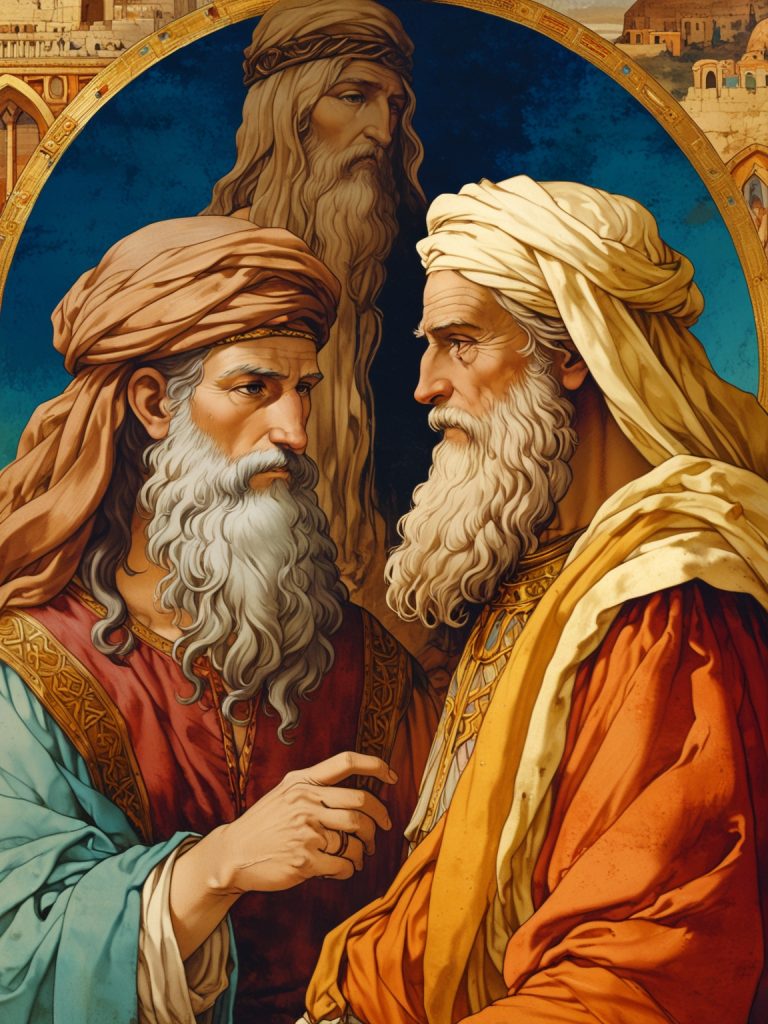
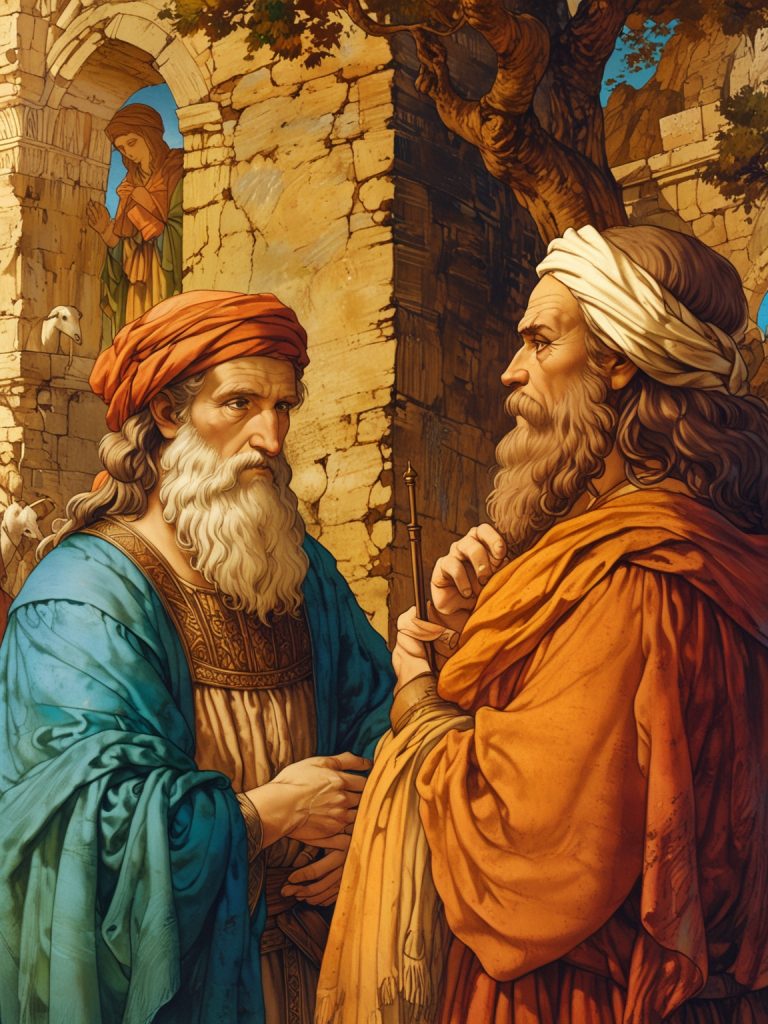
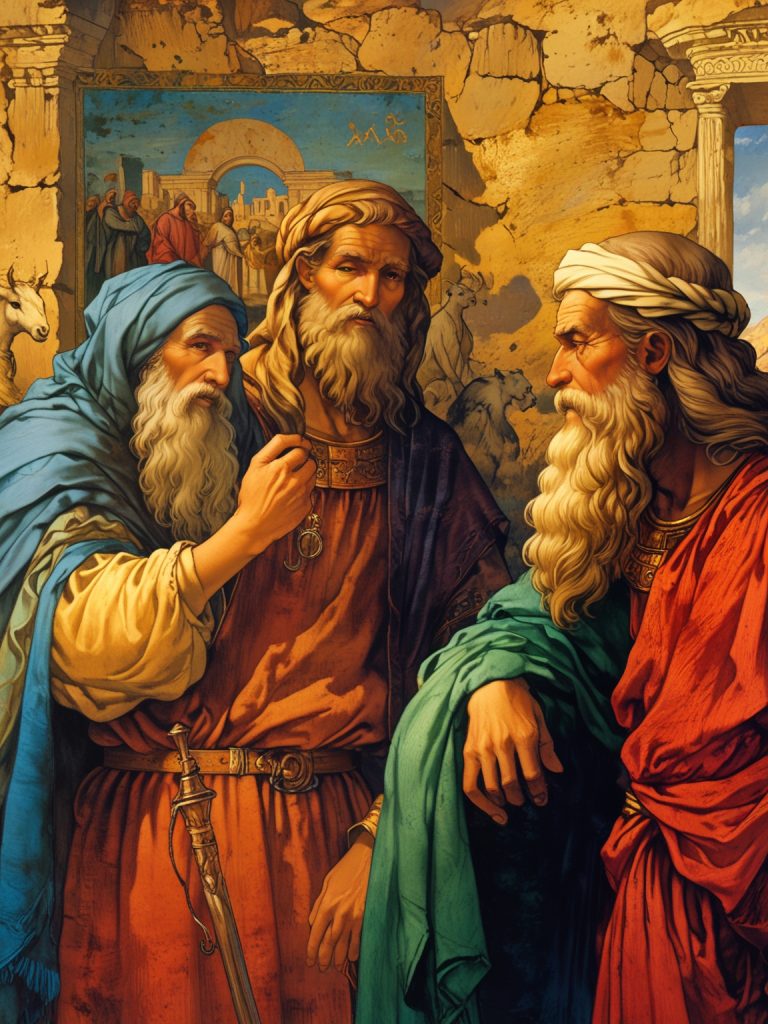
Verse 22: “At that time Abimelek and Phicol the commander of his forces said to Abraham, ‘God is with you in everything you do.'”
Abimelek, a local king, and Phicol, his military commander, recognize God’s evident blessing and presence in Abraham’s life. This acknowledgment reflects their respect and perhaps a sense of awe towards Abraham, seeing the favor and success that accompanies him.
Verse 23: “‘Now swear to me here before God that you will not deal falsely with me or my children or my descendants. Show to me and the country where you now reside as a foreigner the same kindness I have shown to you.'”
Abimelek seeks a formal agreement with Abraham to ensure mutual honesty and kindness. He requests Abraham to swear an oath before God, emphasizing the seriousness and sanctity of this commitment. Abimelek’s plea highlights his desire for a peaceful and trustworthy relationship, not just with Abraham but also with his descendants.
Verse 24: “Abraham said, ‘I swear it.'”
Abraham readily agrees to Abimelek’s request, affirming his commitment to honesty and kindness. This quick agreement signifies Abraham’s willingness to live in peace and uphold integrity in his dealings.
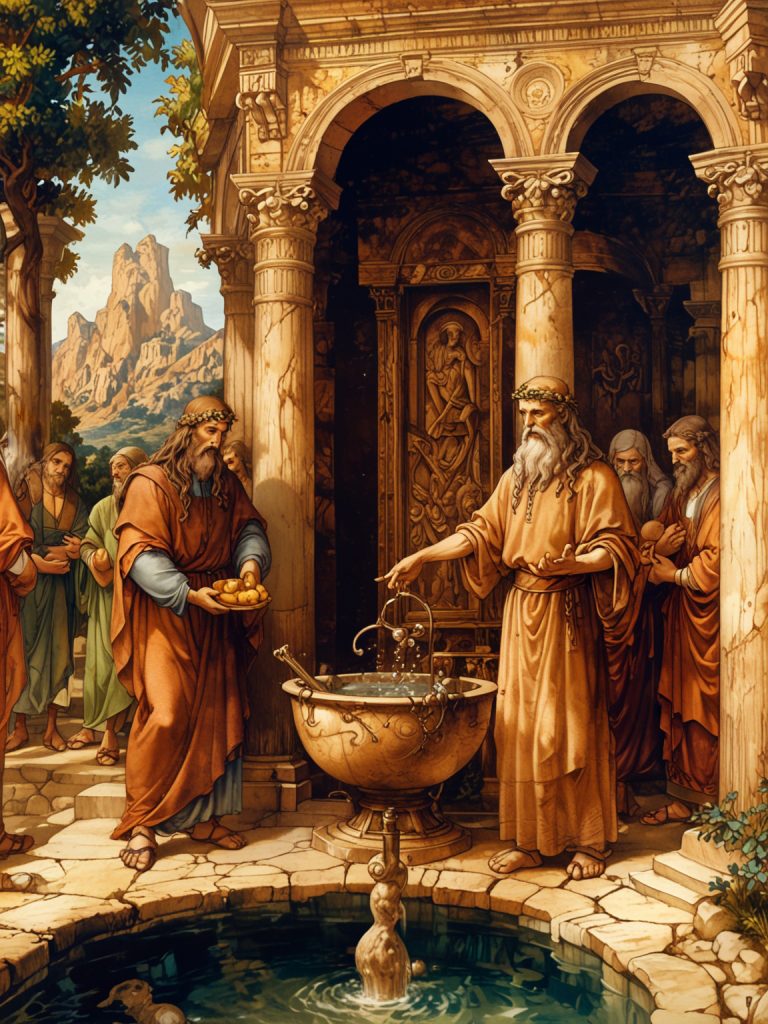
Verse 25: “Then Abraham complained to Abimelek about a well of water that Abimelek’s servants had seized.”
Abraham brings up a grievance about a well that had been taken by Abimelek’s servants. Wells were crucial for survival in the arid region, and this complaint indicates a significant issue impacting Abraham’s livelihood and rights.
Verse 26: “But Abimelek said, ‘I don’t know who has done this. You did not tell me, and I heard about it only today.'”
Abimelek responds with surprise, expressing his ignorance of the incident. He had not been informed of the well’s seizure until now. His response shows his openness to address the problem and his willingness to resolve it amicably.
Verse 27: “So Abraham brought sheep and cattle and gave them to Abimelek, and the two men made a treaty.”
To formalize their agreement and resolve the dispute, Abraham offers sheep and cattle to Abimelek. This exchange of livestock symbolizes the making of a treaty, ensuring peace and cooperation between them.
Verse 28: “Abraham set apart seven ewe lambs from the flock,”
Abraham specifically sets aside seven ewe lambs, signifying an additional, special part of the agreement. The number seven often symbolizes completeness and perfection in the Bible, adding weight to the gesture.
Verse 29: “and Abimelek asked Abraham, ‘What is the meaning of these seven ewe lambs you have set apart by themselves?'”
Abimelek inquires about the specific significance of the seven ewe lambs, seeking clarity on this part of the agreement.
Verse 30: “He replied, ‘Accept these seven lambs from my hand as a witness that I dug this well.'”
Abraham explains that the seven ewe lambs are a testimony to his rightful ownership of the well. This act serves as a witness to the agreement that Abraham had dug the well, solidifying his claim and ensuring there is no future dispute over it.
Verse 31: “So that place was called Beersheba, because the two men swore an oath there.”
The name Beersheba, meaning “well of the oath” or “well of seven,” commemorates the treaty made between Abraham and Abimelek. It marks the spot where they swore their oaths, signifying the importance of this agreement in maintaining peace and cooperation.
This passage shows the importance of integrity, honesty, and peaceful resolutions in relationships. Abraham and Abimelek’s treaty underscores the value of mutual respect and clear communication, especially when resolving conflicts. Their agreement, marked by the exchange of livestock and the naming of Beersheba, serves as a testament to the power of oaths and the pursuit of harmony in human interactions. This story encourages us to seek peaceful resolutions and to uphold our commitments with integrity and respect for others.
Genesis 21:32-34 NIV
After the treaty had been made at Beersheba, Abimelek and Phicol the commander of his forces returned to the land of the Philistines. Abraham planted a tamarisk tree in Beersheba, and there he called on the name of the Lord, the Eternal God. And Abraham stayed in the land of the Philistines for a long time.
Genesis 21:32-34 NIV
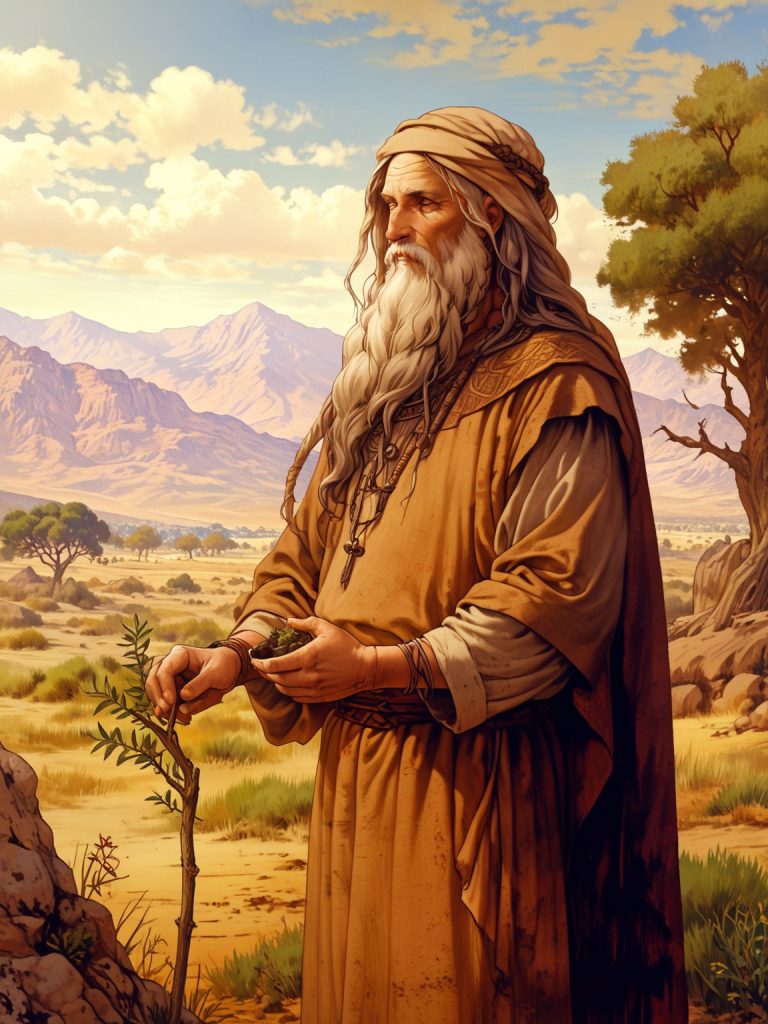
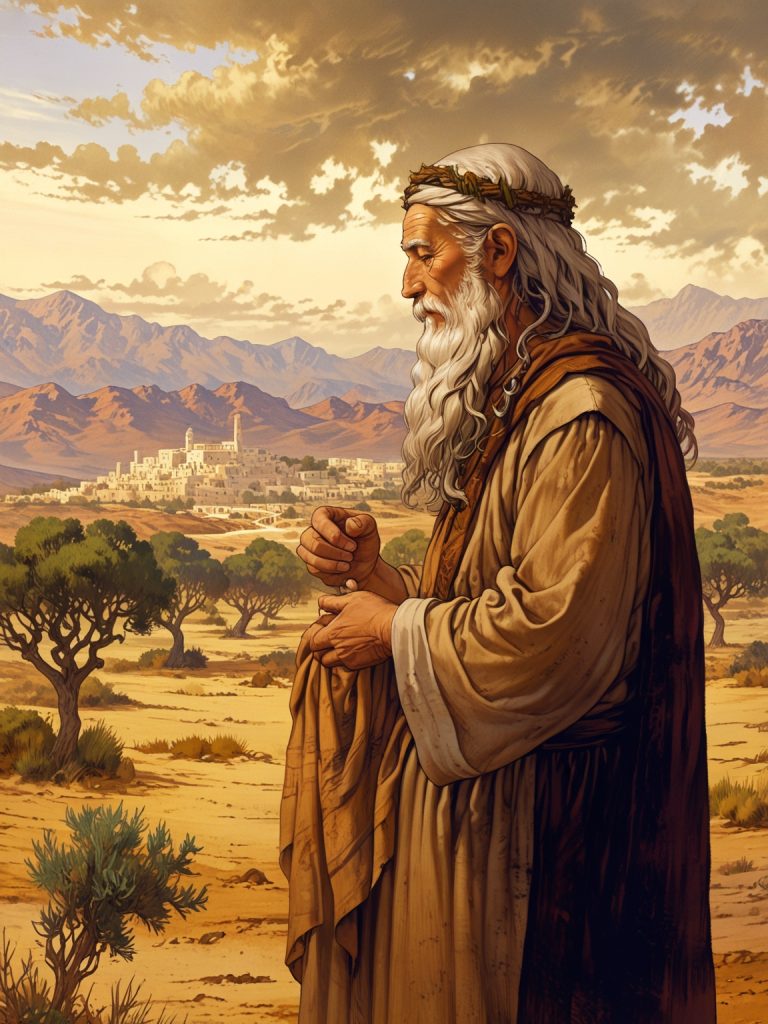
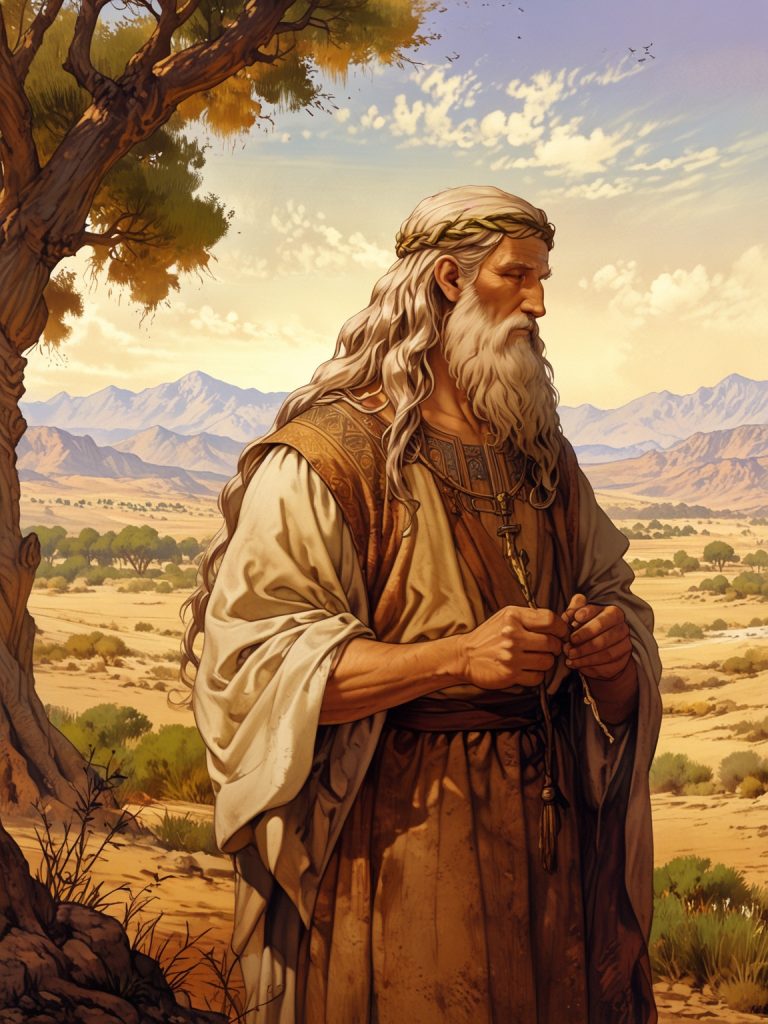
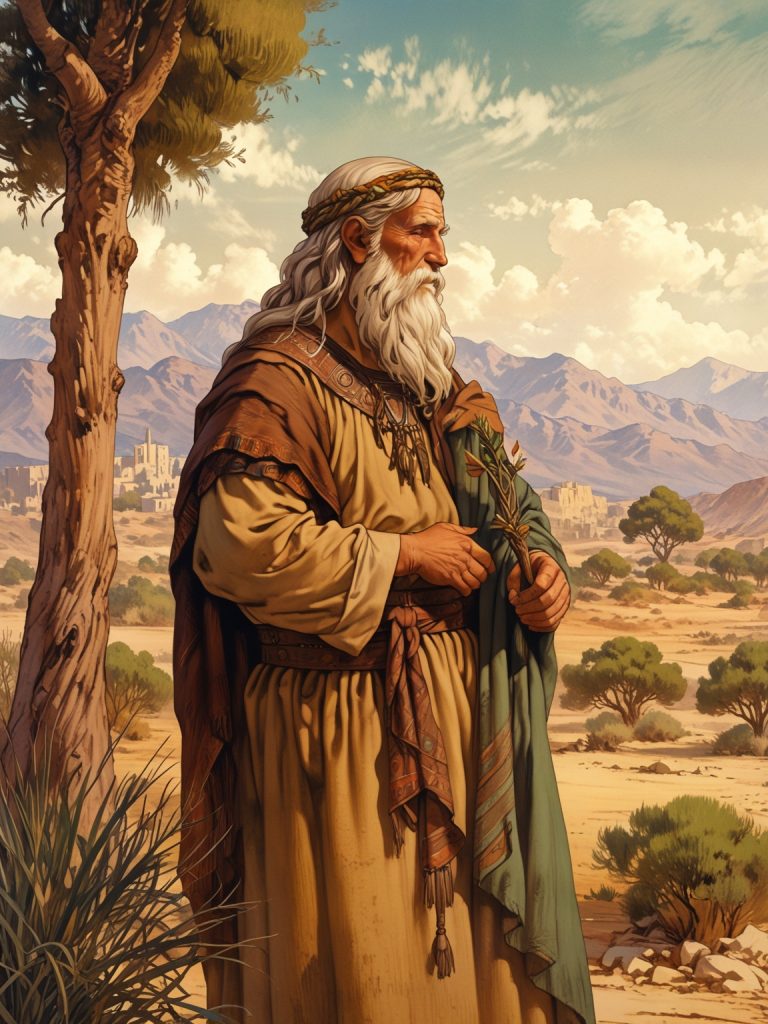
Verse 32: “After the treaty had been made at Beersheba, Abimelek and Phicol the commander of his forces returned to the land of the Philistines.”
This verse concludes the story of the treaty between Abraham and Abimelek. After making the agreement at Beersheba, Abimelek and Phicol return to their homeland. This marks the successful resolution of their negotiations, leading to peace and mutual respect between Abraham and the Philistines.

Verse 33: “Abraham planted a tamarisk tree in Beersheba, and there he called on the name of the Lord, the Eternal God.”
In this verse, we see Abraham’s response to the peaceful agreement. He plants a tamarisk tree, which is a symbol of long-lasting peace and stability. Tamarisk trees are known for their deep roots and longevity, representing Abraham’s desire for enduring peace in the land. Additionally, Abraham calls on the name of the Lord, the Eternal God, signifying his gratitude and devotion to God. By doing this, Abraham acknowledges God’s role in securing the treaty and expresses his faith in God’s eternal presence and promises.
Verse 34: “And Abraham stayed in the land of the Philistines for a long time.”
This final verse highlights the stability and security that resulted from the treaty. Abraham remains in the land of the Philistines for an extended period, indicating that the agreement brought lasting peace and allowed him to live without fear of conflict. This peaceful coexistence demonstrates the success of the treaty and God’s faithfulness in providing for Abraham and his descendants.
This passage shows the importance of peaceful resolutions and the role of faith in securing and maintaining harmony. The treaty at Beersheba not only resolved the immediate conflict but also established a foundation for long-term peace. Abraham’s actions—planting the tamarisk tree and calling on the name of the Lord—reflect his gratitude and trust in God’s eternal presence. This story encourages us to seek peaceful solutions in our own lives and to place our trust in God’s enduring promises.
In Genesis 21, we witness significant events that highlight God’s faithfulness and the power of His promises. From the miraculous birth of Isaac, fulfilling God’s promise to Abraham and Sarah, to the treaty at Beersheba establishing peace and stability, this chapter showcases God’s active presence and provision in the lives of His people. Hagar and Ishmael’s story reminds us of God’s compassion and care, even in the wilderness moments, while Abraham’s planting of the tamarisk tree signifies lasting peace and trust in God’s eternal promises.
As you reflect on these powerful narratives, we invite you to delve deeper into the Bible’s rich stories and lessons at Moralisee.com. Our website features Bible chapters accompanied by beautifully AI-generated images, offering a unique and visually captivating way to engage with Scripture. Join us at Moralisee.com and let these images inspire and enhance your journey through God’s Word.


