

Genesis 18:1-5 NIV
The Lord appeared to Abraham near the great trees of Mamre while he was sitting at the entrance to his tent in the heat of the day. Abraham looked up and saw three men standing nearby. When he saw them, he hurried from the entrance of his tent to meet them and bowed low to the ground.
He said, “If I have found favor in your eyes, my lord, do not pass your servant by. Let a little water be brought, and then you may all wash your feet and rest under this tree. Let me get you something to eat, so you can be refreshed and then go on your way—now that you have come to your servant.”
“Very well,” they answered, “do as you say.”
Genesis 18:1-5 NIV
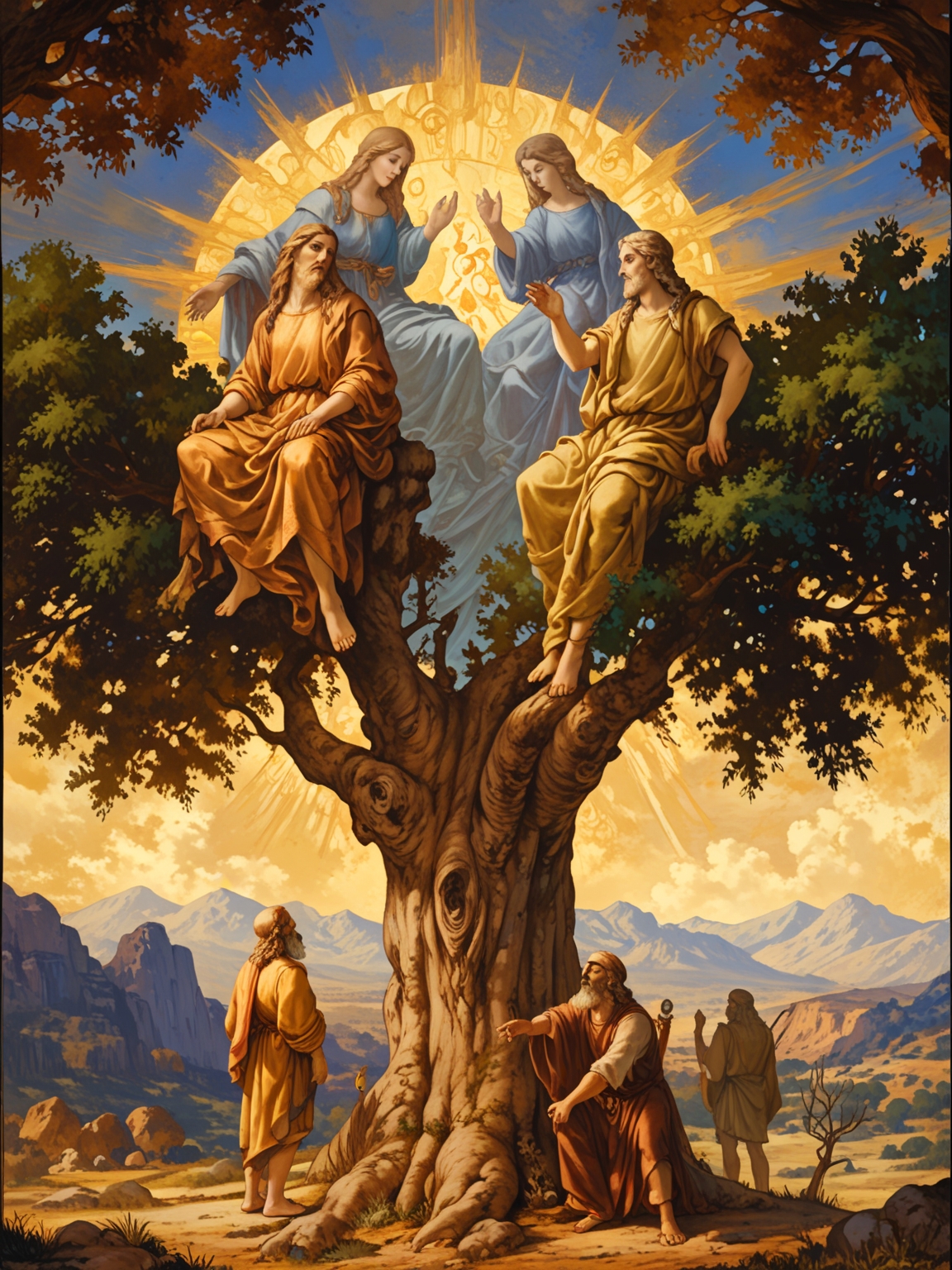
Genesis 18:1-5 is a story about hospitality and an unexpected encounter with the divine.
Verse 1: We see Abraham, a man of great faith, relaxing by his tent during the hottest portion of the day. The “great trees of Mamre” evoke a sense of calm and serenity.
Verse 2: Suddenly, Abraham looks up to see three mystery visitors. The passage does not explicitly state that they are angels or God, but something about them draws his attention.
Verse 3: This is where Abraham’s amazing hospitality shines! Even though he does not recognize them, he addresses them with respect as “my lord” and requests that they not “pass by his servant.” It serves as a reminder that compassion and charity are crucial to everyone you meet.
Verse 4–5: Abraham does everything he can to make his guests comfortable. Water to wash their feet, shade to relax in, and, of course, a fantastic lunch! He wants them to feel revived and continue on their adventure, which is a wonderful act of selflessness.
Verse 5: The guests merely respond, “Very well, do as you say.” This may seem brief, but it demonstrates Abraham’s earnest desire to serve.
This is an excellent example of how God can meet us in unexpected ways. It also teaches us the value of hospitality, even toward strangers. Remember that a simple act of kindness can have a significant impact!
Genesis 18:6-12 NIV
So Abraham hurried into the tent to Sarah. “Quick,” he said, “get three seahs of the finest flour and knead it and bake some bread.”
Then he ran to the herd and selected a choice, tender calf and gave it to a servant, who hurried to prepare it. He then brought some curds and milk and the calf that had been prepared, and set these before them. While they ate, he stood near them under a tree.
“Where is your wife Sarah?” they asked him.
“There, in the tent,” he said.
Then one of them said, “I will surely return to you about this time next year, and Sarah your wife will have a son.”
Now Sarah was listening at the entrance to the tent, which was behind him. Abraham and Sarah were already very old, and Sarah was past the age of childbearing. So Sarah laughed to herself as she thought, “After I am worn out and my lord is old, will I now have this pleasure?”
Genesis 18:6-12 NIV
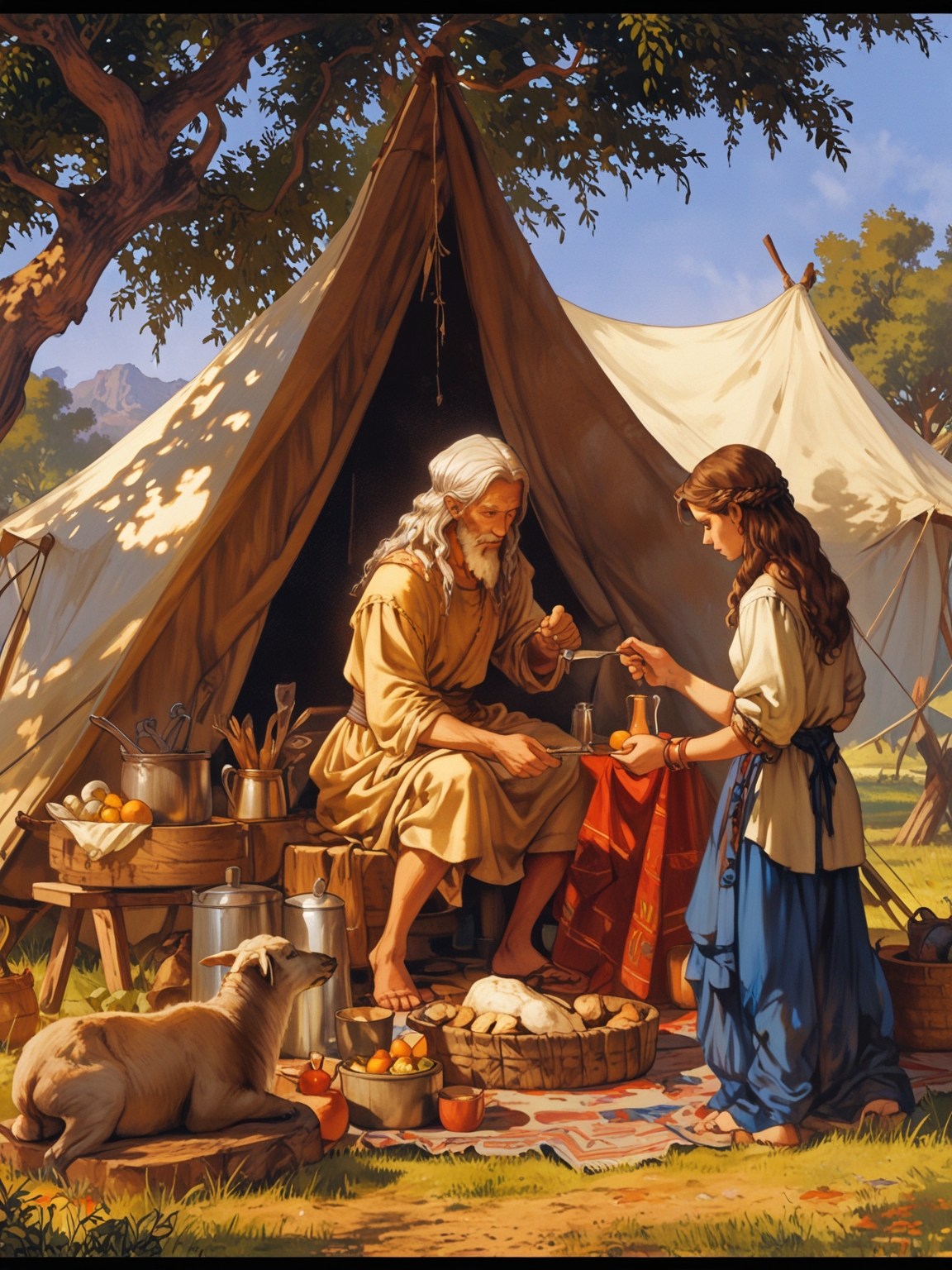
Verse 6-8:
Abraham doesn’t waste any time! He instructs Sarah to prepare a feast for his guests, demonstrating his unwavering dedication to hospitality. From the finest grain to a sensitive calf, he provides the best. Notice how he stands by them while they eat, which is another gesture of respect.
Verse 9:
One of the visitors asks about Sarah, perhaps hinting at their importance.
Verse 10:
Now, here comes the surprise! This visitor, who we suspect may be God himself, promises Abraham and Sarah a son next year! This is a significant deal, especially given their age.
Verse 11-12:
Sarah finds the promise unbelievable. She’s past the point of bearing children, and laughing breaks out – a mix of disbelief and possibly a hint of humor.
This verse is a wonderful reminder of God’s faithfulness. He can work through even the most seemingly insurmountable situations. It also demonstrates that laughter, even in the face of skepticism, may be a human response.
Genesis 18:13-15 NIV
Then the Lord said to Abraham, “Why did Sarah laugh and say, ‘Will I really have a child, now that I am old?’ Is anything too hard for the Lord? I will return to you at the appointed time next year, and Sarah will have a son.”
Sarah was afraid, so she lied and said, “I did not laugh.”
But he said, “Yes, you did laugh.”
Genesis 18:13-15 NIV


Verse 13-14:
The Lord, now fully revealed to Abraham, confronts Sarah about her laughter. He reminds them of His might by asking, “Is anything too hard for the Lord?” He’s basically saying, “Don’t doubt me, I can do anything!” He repeats his promise of a son next year.
Verse 15:
Sarah denies laughing, maybe because she is experiencing a range of emotions, including dread and doubt. It is a natural human tendency to be skeptical about something that appears too wonderful to be true.
Verse 16:
The Lord kindly corrects her, “Yes, you did laugh.” There is no judgment here; simply a reminder that He sees everything.
This verse is a powerful reminder of God’s capacity to accomplish the impossible. Even when we doubt, He is loyal. It’s also OK to express our questions and fears to God, just as Sarah did.
Genesis 18:16-21 NIV
When the men got up to leave, they looked down toward Sodom, and Abraham walked along with them to see them on their way. Then the Lord said, “Shall I hide from Abraham what I am about to do? Abraham will surely become a great and powerful nation, and all nations on earth will be blessed through him. For I have chosen him, so that he will direct his children and his household after him to keep the way of the Lord by doing what is right and just, so that the Lord will bring about for Abraham what he has promised him.”
Then the Lord said, “The outcry against Sodom and Gomorrah is so great and their sin so grievous that I will go down and see if what they have done is as bad as the outcry that has reached me. If not, I will know.”
Genesis 18:16-21 NIV
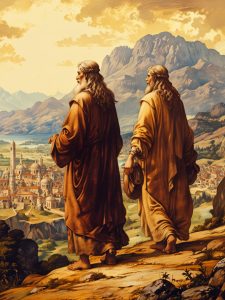
The story takes a bit of a turn here.
Verse 16:
As the tourists prepare to leave, Abraham walks alongside them, another example of his wonderful hospitality. They travel to Sodom and Gomorrah, two cities notorious for immorality.
Verse 17:
The Lord, now alone with Abraham, poses a thought-provoking question: “Shall I hide from Abraham what I am about to do?” This demonstrates God’s closeness to Abraham, since he desires to share even painful decisions.
Verse 18-19:
The Lord reminds Abraham of His promises: a mighty nation and a blessing to all countries. This benefit would come from Abraham’s faithfulness in rearing his family to follow God’s ways.
Verse 20-21:
The conversation turns to Sodom and Gomorrah. The uproar against their wickedness is so tremendous that the Lord chooses to look into it. He will see for himself whether the reports are genuine.
This text focuses on God’s justice and yearning for righteousness. He seeks the truth rather than making blind judgments. It also emphasizes the need of leading a God-pleasing life, as Abraham did.
Genesis 18:22-25 NIV
The men turned away and went toward Sodom, but Abraham remained standing before the Lord. Then Abraham approached him and said: “Will you sweep away the righteous with the wicked? What if there are fifty righteous people in the city? Will you really sweep it away and not spare the place for the sake of the fifty righteous people in it? Far be it from you to do such a thing—to kill the righteous with the wicked, treating the righteous and the wicked alike. Far be it from you! Will not the Judge of all the earth do right?”
Genesis 18:22-25 NIV
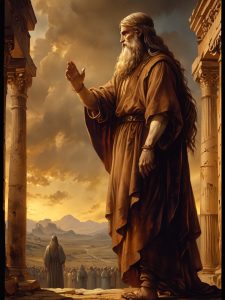
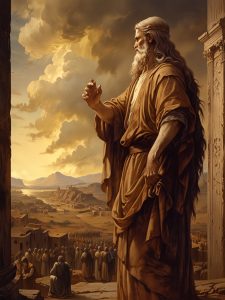
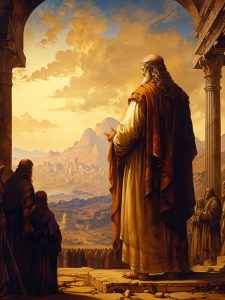
This passage demonstrates Abraham’s courage and trust in God’s justice.
Verse 22:
The guests, who had previously been revealed to be the Lord, proceeded to Sodom. Abraham, however, remains behind.
Verse 23:
He approaches the Lord with a bold question: “Will you sweep away the righteous alongside the wicked?” Abraham recognizes the evil of Sodom, but he also trusts in God’s justice.
Verse 24:
He initiates a negotiation; what if there are some righteous individuals in the city? Should the entire place be destroyed? He proposes 50 righteous persons, an unusually large number for a city like Sodom.
Verse 25:
Abraham appeals to God’s character. He says, “Far be it from you” to destroy both the good and the wicked. He feels that God is a fair judge who would not do such a thing.
This text is a wonderful illustration of intercession. Abraham begs for the innocents of Sodom. It also demonstrates that God accepts our questions and discussions. He wants us to wrestle with faith and justice.
Genesis 18:26-33 NIV
The Lord said, “If I find fifty righteous people in the city of Sodom, I will spare the whole place for their sake.”
Then Abraham spoke up again: “Now that I have been so bold as to speak to the Lord, though I am nothing but dust and ashes, what if the number of the righteous is five less than fifty? Will you destroy the whole city for lack of five people?”
“If I find forty-five there,” he said, “I will not destroy it.”
Once again he spoke to him, “What if only forty are found there?”
He said, “For the sake of forty, I will not do it.”
Then he said, “May the Lord not be angry, but let me speak. What if only thirty can be found there?”
He answered, “I will not do it if I find thirty there.”
Abraham said, “Now that I have been so bold as to speak to the Lord, what if only twenty can be found there?”
He said, “For the sake of twenty, I will not destroy it.”
Then he said, “May the Lord not be angry, but let me speak just once more. What if only ten can be found there?”
He answered, “For the sake of ten, I will not destroy it.”
When the Lord had finished speaking with Abraham, he left, and Abraham returned home.
Genesis 18:26-33 NIV
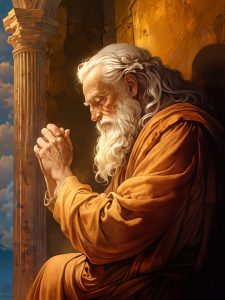
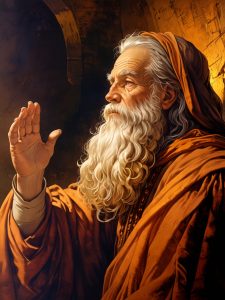
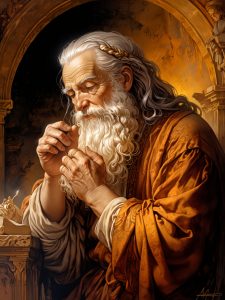
This passage shows Abraham’s incredible persistence and his compassion for the people of Sodom.
Verse 26:
The Lord agrees to save Sodom if there are 50 righteous individuals. This is a symbol of God’s mercy, even for a corrupt city.
Verse 27:
Abraham, ever humble, recognizes his own limits (“dust and ashes”) while continuing to beg. He begins haggling with God, wondering what if there are slightly fewer than 50 righteous individuals.
Verse 28-32:
This lovely back and forth continues. Abraham continues to ask, the number drops, and God promises to spare the city for the sake of the righteous. This demonstrates God’s readiness to listen and yearning for mercy.
Verse 33:
Finally, when the conversation reaches ten, it ends. The Lord departs, and Abraham returns home. We don’t know how many righteous people were found, but the story conveys a powerful message.
This passage is a reminder that God is merciful. Even in judgment, He seeks opportunities for kindness. It also shows us the power of intercession – praying for others, even those in difficult situations.
Okay, everyone, this concludes our study at Genesis 18. We learned about Abraham’s extraordinary hospitality, the promise of a son, and God’s justice and mercy.
This passage is a beautiful reminder that God is faithful, even when things seem impossible. He hears our prayers, including our doubts and worries. And He is always willing to provide kindness, even in the face of sin.
If you want to read more Bible chapters with stunning AI-generated visuals, visit our bible section! They have an incredible collection that will bring these stories to life in a completely new way.
Thank you for joining me on this trip through Scripture. Let us continue to grow in faith together!


