

Genesis 11:1-4 NIV
Now the whole world had one language and a common speech. As people moved eastward, they found a plain in Shinar and settled there.
They said to each other, “Come, let’s make bricks and bake them thoroughly.” They used brick instead of stone, and tar for mortar. Then they said, “Come, let us build ourselves a city, with a tower that reaches to the heavens, so that we may make a name for ourselves; otherwise we will be scattered over the face of the whole earth.”
Genesis 11:1-4 NIV
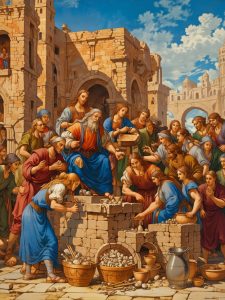
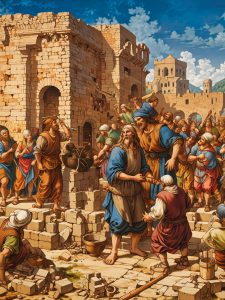
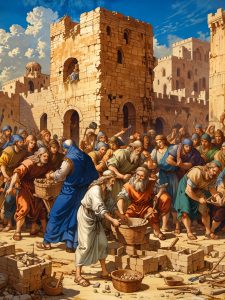
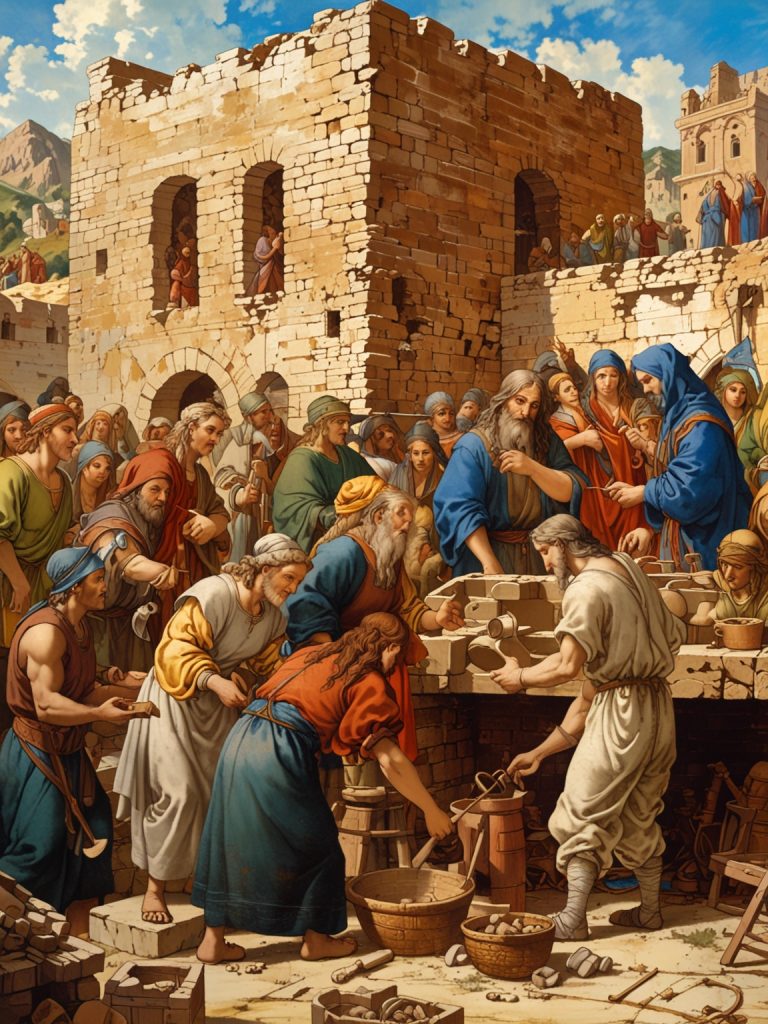
Genesis 11. This narrative, often known as the Tower of Babel, contains many fascinating aspects.
Verse 1: Now the whole world had one language and a common speech.
Imagine a world in which everyone understood each other perfectly! This scripture explains that after the flood, humanity was not divided by language barriers. Imagine how much easier communication and teamwork would have been!
Verse 2: As people moved eastward, they found a plain in Shinar and settled there.
Here, we see people beginning to migrate and explore. The “land of Shinar” is thought to be someplace in Mesopotamia, or modern-day Iraq. It appears that they discovered a fertile spot and decided to establish roots.
Verse 3: They said to each other, “Come, let’s make bricks and bake them thoroughly.” They used brick instead of stone, and tar for mortar.
This verse becomes fascinating! The people are becoming more resourceful. They’re figuring out how to build with materials like brick and tar that are stronger than mud. Perhaps they’re preparing a large project!
Verse 4: Then they said, “Come, let us build ourselves a city, with a tower that reaches to the heavens, so that we may make a name for ourselves; otherwise we will be scattered over the face of the whole earth.”
Things become slightly more complicated from here. They intend to develop a grand metropolis with a very tall tower that “reaches the heavens.” This could be viewed as an engineering marvel, but there is a deeper significance behind it. They’re saying, “Let’s make a name for ourselves,” implying a desire for fame and making their mark on the world, as well as a spirit of defiance against God’s instructions to spread out and populate the globe after the flood (Genesis 9:1).
Genesis 11:5-9 NIV
But the Lord came down to see the city and the tower the people were building. The Lord said, “If as one people speaking the same language they have begun to do this, then nothing they plan to do will be impossible for them. Come, let us go down and confuse their language so they will not understand each other.”
So the Lord scattered them from there over all the earth, and they stopped building the city. That is why it was called Babel—because there the Lord confused the language of the whole world. From there the Lord scattered them over the face of the whole earth.
Genesis 11:5-9 NIV



The people’s ambitious building endeavor sparked interest. Now let’s see how God replies in verses 5-9.
Verse 5: But the Lord came down to see the city and the tower the people were building.
Here, God interacts directly with humanity. The Lord “comes down” to watch what his people are up to. This is not intended to be a physical descend, but rather God focusing His attention to what is going on.
Verse 6: The Lord said, “If as one people speaking the same language they have begun to do this, then nothing they plan to do will be impossible for them.”
God sees the possibilities of these unified people. They have the ability to achieve big things since they speak the same language and can collaborate flawlessly. This verse might serve as a reminder of the value of collaboration and straightforward communication.
Verse 7: “Come, let us go down and confuse their language so they will not understand each other.”
Now things take a turn. God chooses to intervene. He sees danger in their unbridled ambition and unity, so He chooses to interrupt their plans. What is the method? He complicates their language, preventing them from communicating with one another.
Why is God doing this? There are varying interpretations. Some believe God is concerned about human pride and the people’s attempt to elevate themselves to His level through the tower. Others regard it as an encouragement to humanity to follow His instruction to go out and populate the globe (Genesis 9:1).
Verse 8: So the Lord scattered them from there over all the earth, and they stopped building the city.
The result of the jumbled languages is obvious: people can no longer collaborate successfully. The enterprise comes to a halt, and the people scatter.
Verse 9: That is why it was called Babel—because there the Lord confused the language of the whole world. From there the Lord scattered them over the face of the whole earth.
The story concludes by explaining the name “Babel,” which is derived from a Hebrew word meaning “confused.” It acts as a remembrance of the event that shattered humanity’s bond.
Genesis 11:10-26 NIV
This is the account of Shem’s family line.
Two years after the flood, when Shem was 100 years old, he became the father of Arphaxad. And after he became the father of Arphaxad, Shem lived 500 years and had other sons and daughters.
When Arphaxad had lived 35 years, he became the father of Shelah. And after he became the father of Shelah, Arphaxad lived 403 years and had other sons and daughters.
When Shelah had lived 30 years, he became the father of Eber. And after he became the father of Eber, Shelah lived 403 years and had other sons and daughters.
When Eber had lived 34 years, he became the father of Peleg. And after he became the father of Peleg, Eber lived 430 years and had other sons and daughters.
When Peleg had lived 30 years, he became the father of Reu. And after he became the father of Reu, Peleg lived 209 years and had other sons and daughters.
When Reu had lived 32 years, he became the father of Serug. And after he became the father of Serug, Reu lived 207 years and had other sons and daughters.
When Serug had lived 30 years, he became the father of Nahor. And after he became the father of Nahor, Serug lived 200 years and had other sons and daughters.
When Nahor had lived 29 years, he became the father of Terah. And after he became the father of Terah, Nahor lived 119 years and had other sons and daughters.
After Terah had lived 70 years, he became the father of Abram, Nahor and Haran.
Genesis 11:10-26 NIV
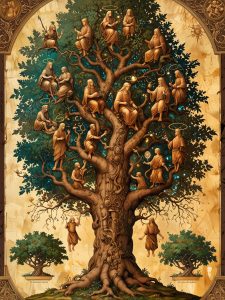
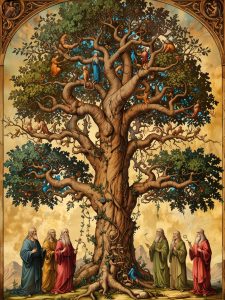
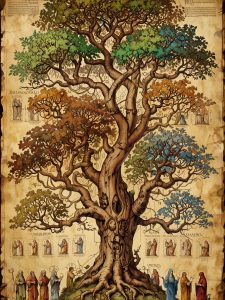
We arrive at a chapter full of names: Genesis 11, verses 10–26. Now, I understand what you’re thinking: a whole bunch of names, how exciting? But, friends, there is a lot of meaning here!
Verse 10: This is the account of Shem’s family line.
This passage serves as a heading, introducing us to the genealogy, or family history, of Shem, one of Noah’s sons. Remember Noah’s Ark? Shem was the son who, along with his brothers Ham and Japheth, helped repopulate the earth following the flood.
Verses 11-26:
Now we see a large list of names, including Shem, Arphaxad, Shelah, Eber, Peleg, Reu, Serug, Nahor, and Terah. These are Shem’s descendants, passed down through the years. The scripture indicates their ages when they became fathers and states that they had other boys and daughters as well.
Why do these names matter? For one thing, they demonstrate the continuance of life following the flood. God’s promise to Noah that humanity would not be wiped out is being fulfilled. These names also serve as a historical record, tracing the ancestry back to Noah, and then to Adam and Eve.
But, most importantly, this list paves the way for something even grander. If you continue reading in Genesis, you will discover that the name Abram (also known as Abraham) is derived from this bloodline. Abraham is a major figure in the Bible, revered as the patriarch of Judaism and a key ancestor of Jesus. So these seemingly regular names are part of God’s big plan unfolding.
Genesis 11:27-32 NIV
This is the account of Terah’s family line.
Terah became the father of Abram, Nahor and Haran. And Haran became the father of Lot. While his father Terah was still alive, Haran died in Ur of the Chaldeans, in the land of his birth. Abram and Nahor both married. The name of Abram’s wife was Sarai, and the name of Nahor’s wife was Milkah; she was the daughter of Haran, the father of both Milkah and Iskah. Now Sarai was childless because she was not able to conceive.
Terah took his son Abram, his grandson Lot son of Haran, and his daughter-in-law Sarai, the wife of his son Abram, and together they set out from Ur of the Chaldeans to go to Canaan. But when they came to Harran, they settled there.
Terah lived 205 years, and he died in Harran.
Genesis 11:27-32 NIV
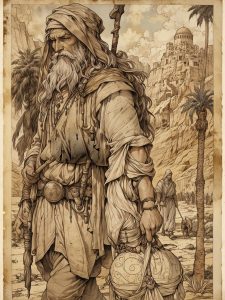
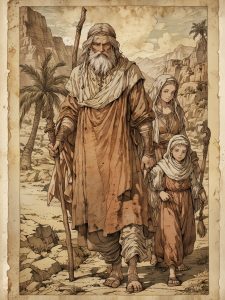
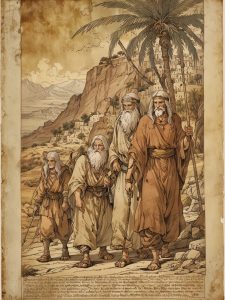
Verse 27: This is the account of Terah’s family line.
As we previously learned, Terah is a descendant of Noah via his son Shem. This verse serves as an introduction to Terah’s story, much like a chapter heading.
Verse 27 (continued): Terah became the father of Abram, Nahor and Haran. And Haran became the father of Lot.
Here we meet Terah’s sons: Abram (also known as Abraham), Nahor, and Haran. The text also references Lot, Haran’s son, who will play a key role later in the story.
Verse 28: While his father Terah was still alive, Haran died in Ur of the Chaldeans, in the land of his birth.
Unfortunately, Haran dies young, even before his father Terah. The passage states that he dies in “Ur of the Chaldeans,” which is thought to be an ancient city in Mesopotamia, modern-day Iraq.
Verse 29: Abram and Nahor both married. The name of Abram’s wife was Sarai, and the name of Nahor’s wife was Milkah; she was the daughter of Haran, Abram’s deceased brother, the father of both Milkah and Iskah.
Now we discover that both Abram and Nahor marry. Abram’s wife is Sarai, and it’s significant to note that Nahor’s wife, Milkah, is Abram’s niece, the daughter of his deceased brother Haran. The passage also includes another name: Iskah, Milkah’s sister.
Verse 30: Now Sarai was childless because she was not able to conceive.
This passage introduces a critical detail: Sarai, Abram’s wife, is unable to bear children. This will be a huge issue for them later on, as God has promised great things to Abram’s descendants.
Verse 31: Terah took his son Abram, his grandson Lot son of Haran, and his daughter-in-law Sarai, the wife of his son Abram, and together they set out from Ur of the Chaldeans to go to Canaan. But when they came to Harran, they settled there.
Here’s when things get interesting! Terah, Abram, Sarai, and Lot decide to leave their home in Ur and go on a journey. God has called Abram to a new land, Canaan, and this is the first step towards obedience. However, the voyage is cut short when they stop in Harran and stay for a bit.
Verse 32: Terah lived 205 years, and he died in Harran.
The story concludes with Terah’s death at the age of 205. This enables Abram to fully embrace his calling and proceed on the path God has set for him.
That’s it for today, guys! We’ve read through a fascinating chapter in Genesis, following Terah’s family line and witnessing the seeds of God’s plan being sown in the life of Abram. We heard of a family on the move, a couple battling difficulties, and a call to something more.
Remember, the Bible is filled with stories of trust, hope, and God’s commitment to His people. And, while we haven’t had any illustrations today, there are some incredible tools available that employ AI technology to produce stunning graphics inspired by these biblical texts. If you’re a visual learner, I recommend checking some of these out online! [Search Bible AI Art or BiblePics]. They can help you gain a better knowledge and respect for the Bible’s depth.
Most essential, don’t simply read the stories—live them! Discover how God’s word pertains to your own life. Let these stories encourage you to trust Him and follow His lead, no matter where your journey takes you.


