

Genesis 10:1-5 NIV
This is the account of Shem, Ham and Japheth, Noah’s sons, who themselves had sons after the flood.
The sons of Japheth:
Gomer, Magog, Madai, Javan, Tubal, Meshek and Tiras.
The sons of Gomer:
Ashkenaz, Riphath and Togarmah.
The sons of Javan:
Elishah, Tarshish, the Kittites and the Rodanites. (From these the maritime peoples spread out into their territories by their clans within their nations, each with its own language.)
Genesis 10:1-5 NIV
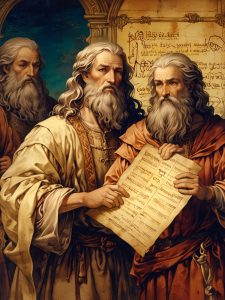
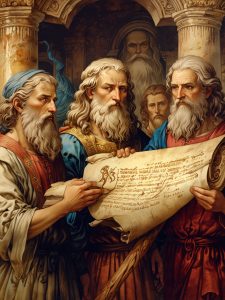
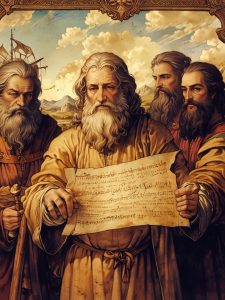
Genesis, chapter 10. It’s like an old family history book, tracing the descendants of Noah’s sons – Shem, Ham, and Japheth.
Verse 1: This verse sets the stage. It tells us this is the story of Noah’s three sons, Shem, Ham, and Japheth, and guess what? They all had kids of their own – after the flood, of course! This is important because these sons and their families became the ancestors of many different people groups around the world.
Verse 2: Now the text focuses on Japheth’s family tree. The list includes seven of his sons: Gomer, Magog, Madai, Javan, Tubal, Meshek, and Tiras. These names may seem odd, yet they are the founding fathers of many nations and tribes, according to this biblical account.
Verses 3-4 include further detail, like to family tree branches. Here are enumerated the sons of Gomer (Ashkenaz, Riphath, and Togarmah) and Javan (Elishah, Tarshish, the Kittites, and the Rodanites).
Verse 5: This verse takes an intriguing turn. It states that these Javan descendants, specifically, became known as “maritime peoples.” They dispersed by water, settling in various locations and formed their own communities, each with their own distinct language. This indicates the diversity that emerged from these families.
Genesis 10:6-20 NIV
The sons of Ham:
Cush, Egypt, Put and Canaan.
The sons of Cush:
Seba, Havilah, Sabtah, Raamah and Sabteka.
The sons of Raamah:
Sheba and Dedan.
Cush was the father of Nimrod, who became a mighty warrior on the earth. He was a mighty hunter before the Lord; that is why it is said, “Like Nimrod, a mighty hunter before the Lord.” The first centers of his kingdom were Babylon, Uruk, Akkad and Kalneh, in Shinar. From that land he went to Assyria, where he built Nineveh, Rehoboth Ir, Calah and Resen, which is between Nineveh and Calah—which is the great city.
Egypt was the father of
the Ludites, Anamites, Lehabites, Naphtuhites, Pathrusites, Kasluhites (from whom the Philistines came) and Caphtorites.
Canaan was the father of
Sidon his firstborn, and of the Hittites, Jebusites, Amorites, Girgashites, Hivites, Arkites, Sinites, Arvadites, Zemarites and Hamathites.
Later the Canaanite clans scattered and the borders of Canaan reached from Sidon toward Gerar as far as Gaza, and then toward Sodom, Gomorrah, Admah and Zeboyim, as far as Lasha.
These are the sons of Ham by their clans and languages, in their territories and nations.
Genesis 10:6-20 NIV
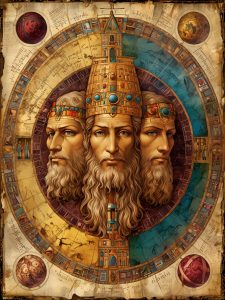
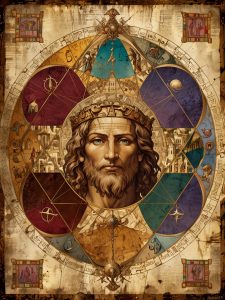
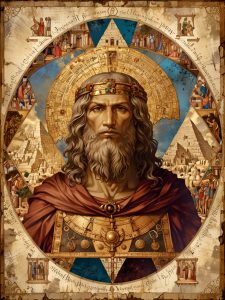
Verses 6–7: Just like previous verses, we’ll begin with a family list. This time it’s Ham’s sons: Cush, Egypt (which means “land of Mizraim”), Put, and Canaan. These names got connected with numerous areas and people groups in ancient times.
Verse 8: This is when it gets interesting! The text introduces Nimrod, a descendant of Cush. Now, this individual is referred to as a “mighty warrior on the earth.” Some translations suggest “hunter”; any way, Nimrod was not someone to tangle with!
Verse 9: This verse is a little unusual. It states that Nimrod was a “mighty hunter before the Lord.” Now, this does not necessarily imply that God approved of his hunting abilities. It may be emphasizing his strength and authority, even if it was not employed in the most holy manner.
Verse 10-12: These verses are more descriptive regarding Nimrod’s exploits. He is credited with creating several key towns in Mesopotamia, a region in the Middle East, including Babylon, Uruk, and Akkad. This depicts a prominent leader who helped to construct these early civilizations.
Verse 13: The passage then moves on to the descendants of Egypt (the land of Mizraim). It lists the numerous tribes that are affiliated with the region.
Verse 15-18: Now it is Canaan’s turn. We have a list of his sons, who became the progenitors of the Canaanites, a people group who lived in Canaan (present-day Israel and neighboring areas).
Verse 19: The Canaanites dispersed and established themselves in a number of cities, some of which you may recognize from other biblical tales, such as Sodom and Gomorrah.
Verse 20: This is the final verse, summarizing information concerning Ham’s descendants. It emphasizes how these families dispersed, establishing their own communities and languages.
Genesis 10:21-32 NIV
Sons were also born to Shem, whose older brother was Japheth; Shem was the ancestor of all the sons of Eber.
The sons of Shem:
Elam, Ashur, Arphaxad, Lud and Aram.
The sons of Aram:
Uz, Hul, Gether and Meshek.
Arphaxad was the father of Shelah,
and Shelah the father of Eber.
Two sons were born to Eber:
One was named Peleg, because in his time the earth was divided; his brother was named Joktan.
Joktan was the father of
Almodad, Sheleph, Hazarmaveth, Jerah, Hadoram, Uzal, Diklah, Obal, Abimael, Sheba, Ophir, Havilah and Jobab. All these were sons of Joktan.
The region where they lived stretched from Mesha toward Sephar, in the eastern hill country.
These are the sons of Shem by their clans and languages, in their territories and nations.
These are the clans of Noah’s sons, according to their lines of descent, within their nations. From these the nations spread out over the earth after the flood.
Genesis 10:21-32 NIV
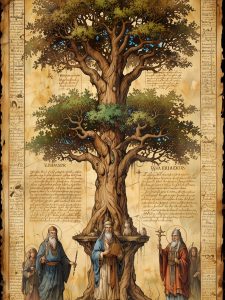
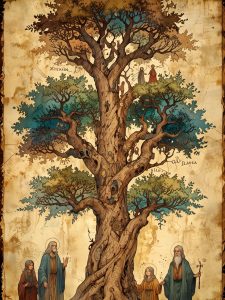
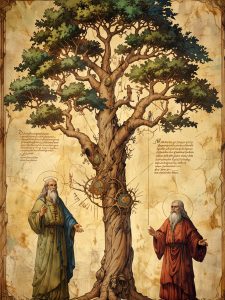
Verse 21: This verse reads like a clarification. It tells us that, despite being younger than Japheth, Shem became the ancestor of a particularly notable group: “the sons of Eber.” We’ll see why that matters in a moment.
Verse 22: Now we get to the main event: Shem’s sons. The chapter mentions Elam, Ashur, Arphaxad, Lud, and Aram. These names are associated with historical kingdoms and people groupings, primarily in the Middle East.
Verse 23 lists the sons of Aram (another of Shem’s sons). These became the forefathers of several tribes.
Verses 24–25: This portion focuses on Arphaxad’s line. We learn that he is Shelah’s father, and Shelah’s son is named Eber. This Eber is the central individual named in verse 21.
Verse 26: Eber had two sons, Peleg and Joktan. Buckle up, because Joktan’s family tree grows rather large!
Verses 27-29: This section lists Joktan’s thirteen sons. While their names may be unfamiliar to us today, they represent the ancestors of many tribes in ancient times.
Verse 30: This passage provides a geographical information. It describes the general location where Joktan’s ancestors settled.
Verse 31: This verse is similar to the ones that end the sections about Ham and Japheth. It highlights that Shem’s descendants also spread out, establishing their own communities and languages inside their respective domains.
Verse 32: This final verse is a great summary of the entire chapter. It reminds us that all of these families – Shem’s, Ham’s, and Japheth’s – are descended from Noah’s sons. Following the flood, the many nations of the globe dispersed.
Remember, this is a historical snapshot. It does not promise to provide a comprehensive picture of ethnicity or current political boundaries. However, it provides an intriguing peek into how humanity evolved following the flood, with Shem’s line playing a particularly significant role in the biblical account.
Well, that concludes this fascinating chapter of Genesis! We’ve seen how Noah’s sons, Shem, Ham, and Japheth, became the forefathers of numerous ethnic groups around the world. It’s a poignant reminder that, despite our differences in language and culture, we all have a fundamental humanity.
This text may appear to be a long list of names, but it actually provides a glimpse into the complex fabric of human history. The Bible is rich of stories that still inspire and challenge us today.
Speaking of inspiration, there are some incredible tools available that mix the power of the Bible’s words with the beauty of AI-generated graphics. These graphics may bring these stories to life in a completely new way. If you’re curious to learn more, try searching for “AI art Bible” online. You might be shocked by what you discover!


