The Sky Opened: Finding Hope in Christ’s Ascension
Explore the profound meaning of Christ’s ascension as described in scripture and Daniel’s vision. Discover the peace and glory of this pivotal event and its significance for believers today.
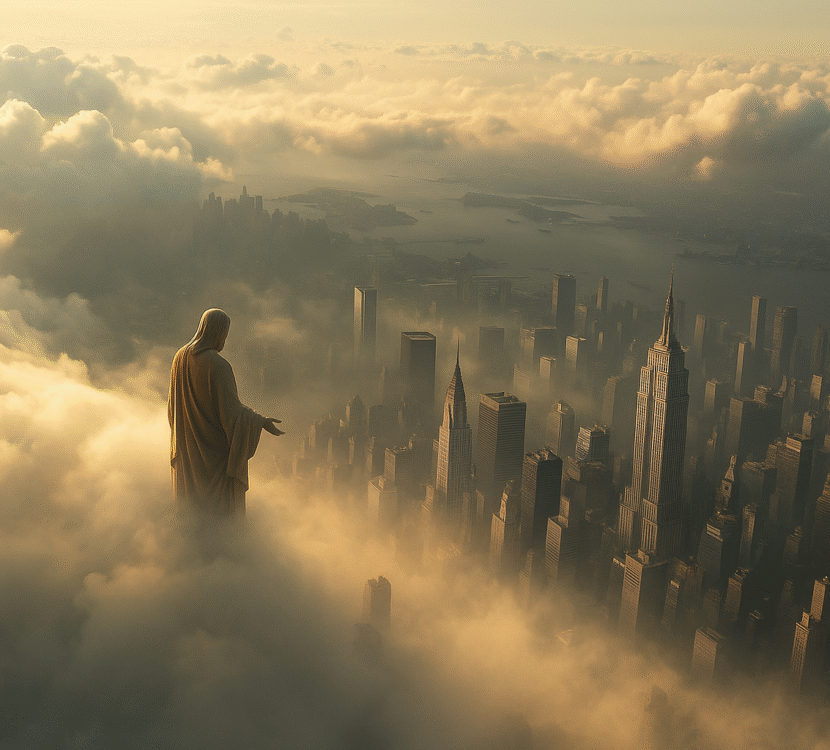
“In my vision at night I looked, and there before me was one like a son of man, coming with the clouds of heaven. He approached the Ancient of Days and was led into his presence. He was given authority, glory and sovereign power; all nations and peoples of every language worshiped him.”
Daniel 7:13-14 (NIV)
Ah, beloved friends, fellow pilgrims on this incredible journey of faith! As we gather here, hearts open and spirits attuned to the whispers of the Divine, let us turn our gaze towards a passage of profound beauty and breathtaking significance. It is a tapestry woven with threads of celestial wonder and grounded in the very bedrock of our hope.
The words, seemingly simple, resonate with the power of eternity:
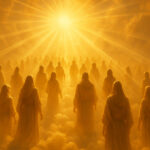
“The sky opened, and light crowned the moment.
He rose — not with thunder, but with peace.
Not in silence, but in glory.
The earth watched. Heaven welcomed.
The Son returned, and eternity breathed.”
To truly grasp the depth of this passage, we must allow it to echo within the chambers of our souls, connecting with the ancient prophecies that paved the way for this glorious event. Our hearts turn instinctively to the sacred scriptures, and the vision of the prophet Daniel in chapter 7, verses 13 and 14, illuminates this moment with divine clarity:
“In my vision at night I looked, and there before me was one like a son of man, coming with the clouds of heaven. He approached the Ancient of Days and was led into his presence. He was given authority, glory and sovereign power; all nations and peoples of every language worshiped him.”
These verses from Daniel serve as a powerful lens through which we can understand the profound implications of the ascension described in our initial passage. Let us, therefore, embark on a detailed exploration of each phrase, allowing the Holy Spirit to guide our understanding and stir our hearts.
“The sky opened, and light crowned the moment.”
Imagine, if you will, the scene. The earthly realm, still perhaps bearing the marks of the momentous events that preceded this – the crucifixion, the resurrection – now witnesses a spectacle that transcends the ordinary. “The sky opened” is not merely a meteorological event; it speaks of a rending of the veil between the earthly and the heavenly. It signifies a divine intervention, a clear and unmistakable manifestation of God’s power breaking through the limitations of our physical reality.
This opening is reminiscent of other pivotal moments in scripture where the heavens parted to reveal God’s presence or His messengers. Think of Jesus’ baptism, where the heavens opened, and the Spirit descended like a dove, accompanied by the Father’s voice declaring His love and affirmation (Matthew 3:16-17). Here, the opening signifies the culmination of Jesus’ earthly ministry and the commencement of His glorious return to the Father.
And then, “light crowned the moment.” Light, in the biblical context, is so much more than mere illumination. It is a symbol of God’s holiness, His truth, His glory, and His very being (Psalm 27:1, John 1:5). This was not just any light; it was a radiant, divine effulgence that enveloped the ascension, signifying the triumph of light over darkness, of life over death. It was a visual declaration that this moment was not one of loss or defeat, but of ultimate victory and divine coronation. The “Son of Man,” as Daniel prophesied, was now being exalted in the heavens, bathed in the very glory of God.
“He rose — not with thunder, but with peace.”
The manner of His ascent is as significant as the event itself. “He rose” – a simple yet powerful declaration of His ascension. It speaks of a deliberate and purposeful movement, a lifting up that was both visible to those who witnessed it and deeply symbolic of His exaltation.
But notice the contrast: “not with thunder, but with peace.” One might expect such a monumental event, the return of the Messiah to the heavenly realms, to be accompanied by dramatic displays of power, by the booming voice of God and the shaking of the earth. Yet, His ascent was characterized by peace. This peace is not merely the absence of conflict; it is the profound shalom of God, a wholeness, a completeness, a tranquility that surpasses all understanding (Philippians 4:7).
This speaks volumes about the nature of Christ’s reign. It is not a rule established through force and intimidation, but one founded on love, grace, and reconciliation. The peace that characterized His ascension is the same peace He offered His disciples (John 14:27) and the same peace He now offers to all who come to Him. His power is not wielded through earthly might, but through the gentle yet irresistible force of divine love.
“Not in silence, but in glory.”
Again, we see a deliberate contrast. One might imagine such a sacred and momentous occasion unfolding in hushed reverence, in a silence that underscores its solemnity. But the passage declares, “not in silence, but in glory.” This implies a vocal affirmation, a celestial chorus, a resounding declaration of His triumph.
This glory echoes the “authority, glory and sovereign power” bestowed upon the “one like a son of man” in Daniel’s vision. It was a moment of divine recognition, a celestial welcome befitting the King of Kings and Lord of Lords. The heavens themselves erupted in praise and adoration, acknowledging the completion of His earthly mission and His rightful return to the Father’s side. This was not a quiet departure, but a glorious homecoming.
“The earth watched.”
Imagine the disciples, their eyes fixed upward, witnessing this extraordinary event unfold before them (Acts 1:9-11). “The earth watched” speaks not only of their physical observation but also of the profound impact this event had on the earthly realm. It marked the end of Jesus’ physical presence on earth, yet it simultaneously ushered in a new era – the age of the Holy Spirit and the birth of the Church.
The ascension was a pivotal moment that forever altered the relationship between God and humanity. It signified the lifting of our humanity into the heavenly realms, in the person of Jesus Christ. It was a visible guarantee of our future hope, a promise that where He is, we shall be also (John 14:3). The earth watched, and in that watching, a new chapter in God’s redemptive plan began.
“Heaven welcomed.”
This phrase evokes a sense of joyous reception, a grand homecoming for the Son of God. “Heaven welcomed” speaks of the celestial realms opening their gates, not just to receive Him, but to celebrate His victory. Think of the countless angels, the hosts of heaven, bowing in adoration as the King returns to His rightful throne.
This welcoming aligns perfectly with Daniel’s vision of the “one like a son of man” being “led into his presence” by the Ancient of Days and being given “authority, glory and sovereign power.” It was a moment of divine affirmation, the Father bestowing upon the Son the fullness of His eternal inheritance. Heaven, in its perfect and unblemished state, rejoiced at the return of its Lord.
“The Son returned, and eternity breathed.”
This final phrase encapsulates the profound and far-reaching consequences of the ascension. “The Son returned” – a simple yet powerful statement of fact. Jesus, the Son of God, having accomplished His earthly mission of redemption, ascended back to the glory He shared with the Father before the world began (John 17:5).
And with His return, “eternity breathed.” This is a deeply evocative image. It suggests a renewal, a fresh infusion of divine life and purpose into the very fabric of existence. The ascension was not merely the end of an earthly chapter; it was the beginning of an eternal reality. It signified the full integration of humanity and divinity in the person of Christ, now seated at the right hand of the Father, interceding for us (Romans 8:34).
The breath of eternity speaks of the unending reign of Christ, His sovereign power over all creation, and the eternal hope that is now ours through faith in Him. It signifies that the work of redemption is complete, the victory over sin and death is secured, and the promise of eternal life with God is now a tangible reality.
Beloved friends, as we meditate on this glorious passage and the illuminating vision of Daniel, our hearts are filled with awe and gratitude. The ascension of our Lord Jesus Christ is not a mere historical event; it is a cornerstone of our faith, a testament to God’s unfathomable love and power. It is the culmination of His earthly journey and the inauguration of His eternal reign.
The sky opened, not in judgment, but in grace. He rose, not in defeat, but in triumph. Not in silence, but with the resounding chorus of heavenly praise. The earth watched, and in that watching, received the promise of a future glory. Heaven welcomed its King, and with His return, eternity itself breathed anew, offering us the very breath of life eternal.
Therefore, as those who have been touched by this incredible truth, as those whose hearts resonate with the glory of this moment, I urge you to delve deeper into the riches of God’s Word. Explore Moralisee.com, where daily devotions await, offering further illumination and inspiration on this and countless other truths that shape our lives as followers of Christ. Let the insights shared there enrich your understanding, strengthen your faith, and draw you ever closer to the heart of our risen and ascended Lord. May the peace and glory of His ascension fill your hearts today and always. Amen.