

Genesis 43:1-2 NIV
Now the famine was still severe in the land. So when they had eaten all the grain they had brought from Egypt, their father said to them, “Go back and buy us a little more food.”
Genesis 43:1-2 NIV
Let’s crack open Genesis 43 today, where things get interesting for our favorite dysfunctional family, the sons of Jacob.
Verse 1: The Famine Continues
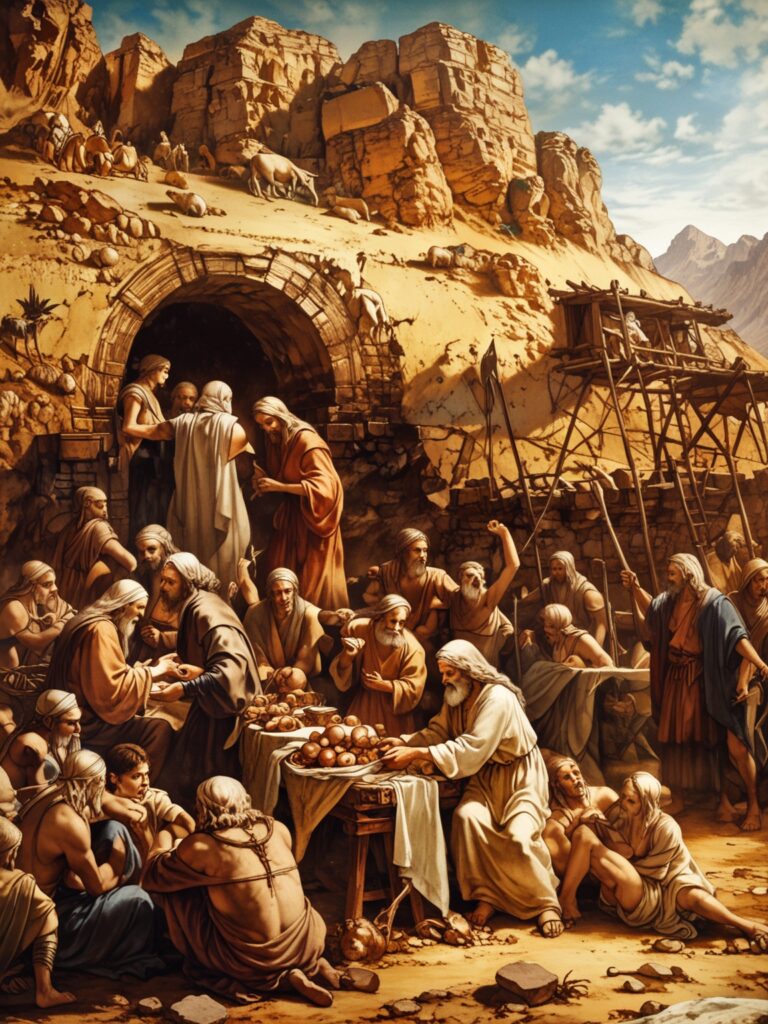
We jump right in with a reminder: the famine is still severe (verse 1). This harsh reality hasn’t budged. Remember the boys went down to Egypt in chapter 42 to buy food because things were so bad back home. They brought some grain back, but clearly, it wasn’t enough.
Verse 2: Jacob Makes a Tough Decision
Now, verse 2 tells us “they had eaten all the grain they had brought from Egypt.” Their bellies are empty again. Jacob, their father, knows they need more food, but this presents a difficult situation.
Here’s the context we need to remember: In the previous chapter, the brothers went to Egypt and encountered a powerful official who demanded they bring their youngest brother, Benjamin, with them on their next trip. Jacob was hesitant because of his past experience losing a son, Joseph.
So, verse 2 sets the stage for a family discussion about a tough choice.
That’s all we get for these first two verses, but stay tuned! The next part of Genesis 43 dives into the family debate about whether or not to send Benjamin, and the consequences of that decision. We’ll explore that together next time.
In the meantime, if you’re facing a difficult choice, remember that God is always with you. He can guide you through tough times, just like He guided Jacob and his sons. Leave a comment below if you’d like to chat more about that!
Genesis 43:3-14 NIV
But Judah said to him, “The man warned us solemnly, ‘You will not see my face again unless your brother is with you.’ If you will send our brother along with us, we will go down and buy food for you. But if you will not send him, we will not go down, because the man said to us, ‘You will not see my face again unless your brother is with you.’ ”
Israel asked, “Why did you bring this trouble on me by telling the man you had another brother?”
They replied, “The man questioned us closely about ourselves and our family. ‘Is your father still living?’ he asked us. ‘Do you have another brother?’ We simply answered his questions. How were we to know he would say, ‘Bring your brother down here’?”
Then Judah said to Israel his father, “Send the boy along with me and we will go at once, so that we and you and our children may live and not die. I myself will guarantee his safety; you can hold me personally responsible for him. If I do not bring him back to you and set him here before you, I will bear the blame before you all my life. As it is, if we had not delayed, we could have gone and returned twice.”
Then their father Israel said to them, “If it must be, then do this: Put some of the best products of the land in your bags and take them down to the man as a gift—a little balm and a little honey, some spices and myrrh, some pistachio nuts and almonds. Take double the amount of silver with you, for you must return the silver that was put back into the mouths of your sacks. Perhaps it was a mistake. Take your brother also and go back to the man at once. And may God Almighty grant you mercy before the man so that he will let your other brother and Benjamin come back with you. As for me, if I am bereaved, I am bereaved.”
Genesis 43:3-14 NIV
We saw the tough situation facing Jacob and his sons. The famine persists (verse 1), and their grain supplies are gone (verse 2). Now, the conversation about sending Benjamin to Egypt heats up!
Judah Takes a Stand (verses 3-5):
Verse 3 introduces Judah, one of Jacob’s sons, who reminds his father of the “solemn warning” (verse 3) from the Egyptian official (who we later learn is Joseph!). This official wouldn’t see them again without Benjamin. Judah is clear: “we will go down and buy food for you” (verse 4) only if Benjamin comes along. (verse 4)
Jacob Feels Betrayed (verse 6):
Verse 6 shows Jacob’s frustration. He feels his sons caused this problem by telling the official about Benjamin in the first place. “Why did you bring this trouble on me?” (verse 6) he asks.
The Brothers Defend Themselves (verses 7-8):
Verses 7 and 8 explain the brothers’ perspective. They simply answered the official’s questions honestly. (verse 7): “The man questioned us closely about ourselves and our family.” (verse 8): Judah emphasizes the urgency: “Send the boy… so that we and you and our children may live and not die.” (verse 8)
Judah Makes a Promise (verses 9-10):
Here’s a turning point! (verse 9): Judah offers a personal guarantee for Benjamin’s safety. He says, “I myself will guarantee his safety… If I do not bring him back… I will bear the blame.” (verse 9) This strong commitment sways Jacob. (verse 10): Judah points out the delay caused by their earlier hesitation, arguing they could have already made a round trip by now.
Jacob Agrees with Conditions (verses 11-14):
Convinced by Judah’s plea, Jacob gives in. (verse 11) He instructs them to take gifts – the “best products of the land” (verse 11) – to appease the official. (verse 12): He even tells them to “take double the amount of silver” (verse 12) to account for the previously returned money in their sacks (verse 12): “perhaps it was a mistake.” (verse 12)
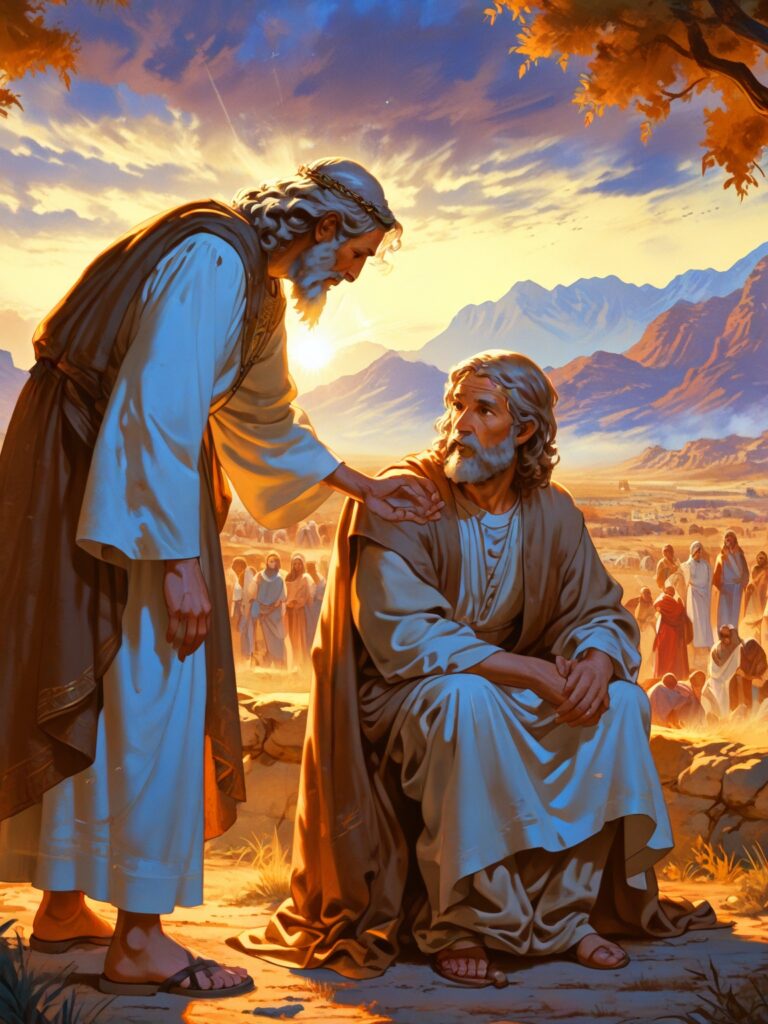
Finally, in verse 13, Jacob agrees to let Benjamin go: “Take your brother also and go back to the man at once.” (verse 13) However, a shadow of worry hangs over him. (verse 14): He says, “May God Almighty grant you mercy” (verse 14) and expresses his fear of losing another son: “As for me, if I am bereaved, I am bereaved.” (verse 14)
This passage highlights the family dynamics, the weight of the famine, and Judah’s leadership in a desperate situation. We see the power of a sincere promise and the ever-present hope for God’s mercy.
Genesis 43:15-18 NIV
So the men took the gifts and double the amount of silver, and Benjamin also. They hurried down to Egypt and presented themselves to Joseph. When Joseph saw Benjamin with them, he said to the steward of his house, “Take these men to my house, slaughter an animal and prepare a meal; they are to eat with me at noon.”
The man did as Joseph told him and took the men to Joseph’s house. Now the men were frightened when they were taken to his house. They thought, “We were brought here because of the silver that was put back into our sacks the first time. He wants to attack us and overpower us and seize us as slaves and take our donkeys.”
Genesis 43:15-18 NIV
We saw Jacob reluctantly agree to send Benjamin to Egypt with his brothers (Genesis 43). Let’s dive into Genesis 44 and see what happens next!
The Brothers Head Back with Gifts (verse 15):
Verse 15 picks up where we left off. The brothers, following Jacob’s instructions, “took the gifts and double the amount of silver, and Benjamin also.” (verse 15) They’re in a hurry to get to Egypt, most likely driven by both the need for food and the fear of what might happen if they delay.
Surprise Invitation to Joseph’s House (verse 16):
Things get interesting in verse 16! Joseph, still unrecognized by his brothers, sees Benjamin and issues an unexpected order. He tells his steward to “Take these men to my house… prepare a meal; they are to eat with me at noon.” (verse 16) This invitation likely confuses the brothers.
Fear Grips the Brothers (verses 17-18):
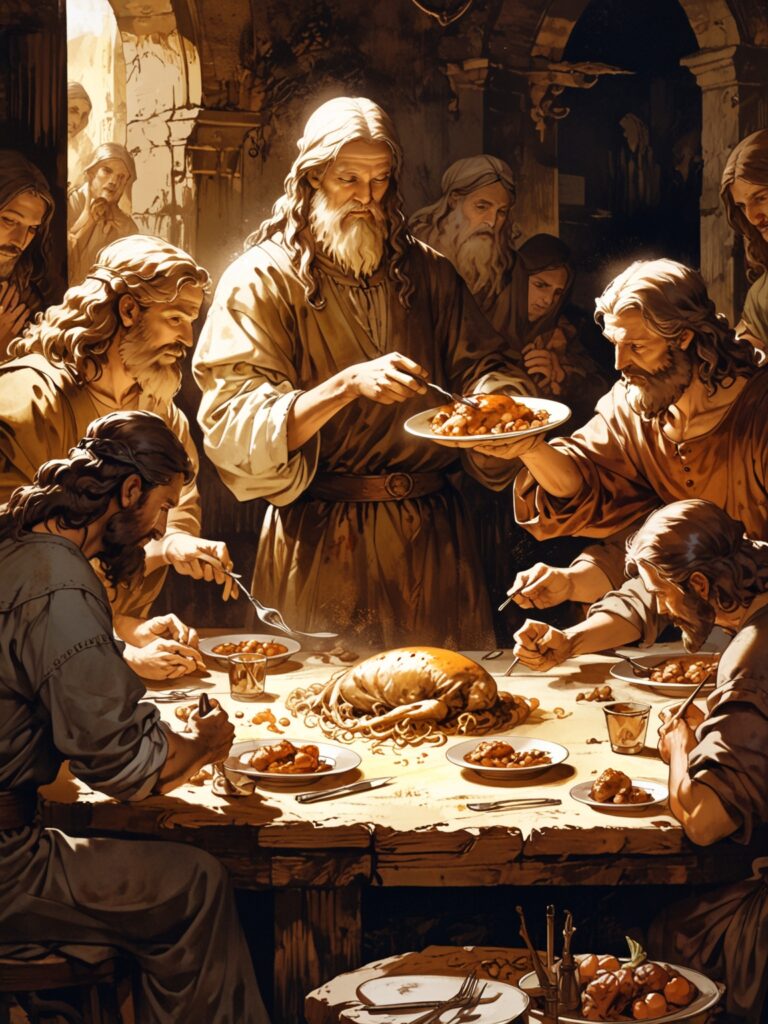
Verse 17 shows the steward following Joseph’s instructions, leading the brothers to his house. (verse 18): The brothers, however, are “frightened” (verse 18). They suspect a trap! They recall the mysterious return of the silver in their sacks (Genesis 42) and fear Joseph is planning some kind of attack or imprisonment. (verse 18): Their thoughts are filled with worry: “We were brought here because of the silver… He wants to attack us…” (verse 18)
Key Takeaways:
This passage highlights the lingering anxiety of the brothers. They haven’t forgotten their past misdeeds and fear Joseph’s retribution. Joseph’s invitation, though seemingly hospitable, only adds to their confusion and suspicion.
Genesis 43:19-23 NIV
So they went up to Joseph’s steward and spoke to him at the entrance to the house. “We beg your pardon, our lord,” they said, “we came down here the first time to buy food. But at the place where we stopped for the night we opened our sacks and each of us found his silver—the exact weight—in the mouth of his sack. So we have brought it back with us. We have also brought additional silver with us to buy food. We don’t know who put our silver in our sacks.”
“It’s all right,” he said. “Don’t be afraid. Your God, the God of your father, has given you treasure in your sacks; I received your silver.” Then he brought Simeon out to them.
Genesis 43:19-23 NIV
The plot thickens in Genesis 44! The brothers, still fearing Joseph’s motives, find themselves in his house. Let’s see how they handle this tense situation.
The Brothers Approach the Steward (verse 19):
Verse 19 shows the brothers taking a cautious approach. They “went up to Joseph’s steward” (verse 19) and try to explain the situation.
Explaining the Silver (verses 20-22):

(verse 20): They politely address the steward as “our lord” (verse 20) and remind him of their previous visit to buy food. (verse 21): They recount the surprising discovery of the returned silver in their sacks (verse 21): “we found his silver—the exact weight—in the mouth of his sack.” (verse 21) They emphasize their honesty by bringing back the silver (verse 21): “So we have brought it back with us.” (verse 21) (verse 22): They even clarify they have “additional silver” (verse 22) for more food, further demonstrating their good intentions. They conclude by claiming ignorance: (verse 22): “We don’t know who put our silver in our sacks.” (verse 22)
The Steward Reassures Them (verse 23):
The steward’s response in verse 23 is interesting. He doesn’t accuse them or show any alarm. (verse 23): He simply says, “It’s all right,” and tells them not to be afraid. (verse 23): He even offers a surprising explanation: “Your God, the God of your father, has given you treasure in your sacks” (verse 23) This could be a genuine belief by the steward, or perhaps a way to calm the brothers’ anxieties. (verse 23): He finishes by revealing he “received your silver” (verse 23) earlier, and then brings out Simeon, who had been detained (Genesis 42).
Key Takeaways:
This passage highlights the brothers’ continued fear and their attempt to explain the returned silver. The steward’s response is ambiguous, but it does ease some tension. The release of Simeon is a positive development, but the situation remains unclear.
Genesis 43:24-30 NIV
The steward took the men into Joseph’s house, gave them water to wash their feet and provided fodder for their donkeys. They prepared their gifts for Joseph’s arrival at noon, because they had heard that they were to eat there.
When Joseph came home, they presented to him the gifts they had brought into the house, and they bowed down before him to the ground. He asked them how they were, and then he said, “How is your aged father you told me about? Is he still living?”
They replied, “Your servant our father is still alive and well.” And they bowed down, prostrating themselves before him.
As he looked about and saw his brother Benjamin, his own mother’s son, he asked, “Is this your youngest brother, the one you told me about?” And he said, “God be gracious to you, my son.” Deeply moved at the sight of his brother, Joseph hurried out and looked for a place to weep. He went into his private room and wept there.
Genesis 43:24-30 NIV
The story in Genesis 44 continues to unfold, filled with both tension and glimpses of tenderness. Let’s delve into verses 24-30 and see what happens next.
Hospitality is Shown (verse 24):
Verse 24 offers a brief moment of normalcy. The steward shows hospitality by “taking the men into Joseph’s house” (verse 24) and providing for their basic needs: “water to wash their feet” (verse 24) and “fodder for their donkeys” (verse 24).
Preparing for the Meal (verse 25):
Verse 25 shows the brothers “preparing their gifts” (verse 25) for Joseph, likely hoping to further appease him. They also anticipate the “meal” (verse 25) they were invited to.
A Respectful Greeting (verse 26):
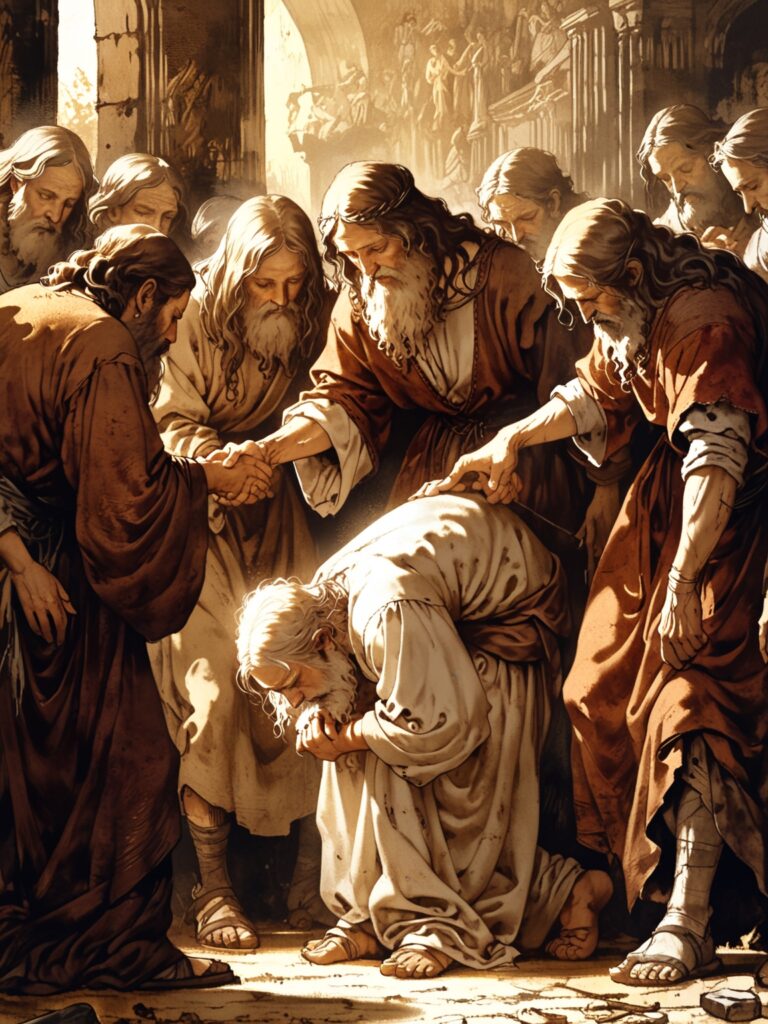
Verse 26 describes the brothers’ approach to Joseph upon his arrival. They “presented… the gifts” (verse 26) and “bowed down before him to the ground” (verse 26), showing respect and perhaps a hint of nervousness.
Joseph’s Inquiry about their Father (verse 27):
Verse 27 reveals a more personal side of Joseph. He inquires about their well-being, asking “How are they?” (verse 27) Then, specifically about their father: “How is your aged father you told me about? Is he still living?” (verse 27) This could be genuine concern or a way to gauge their honesty.
The Brothers Respond with Respect (verse 28):
Verse 28 shows the brothers replying respectfully, addressing him as “Your servant our father” (verse 28) and “bowed down, prostrating themselves before him” (verse 28).
Joseph Recognizes Benjamin (verse 29):
The key moment arrives in verse 29. Joseph sees his younger brother Benjamin and a wave of emotion washes over him. He recognizes him as “your youngest brother” (verse 29) and inquires further: “Is this your youngest brother, the one you told me about?” (verse 29) He even utters a blessing: “God be gracious to you, my son.” (verse 29) This tender moment hints at Joseph’s deep affection for Benjamin.
Joseph Overwhelmed by Emotion (verse 30):
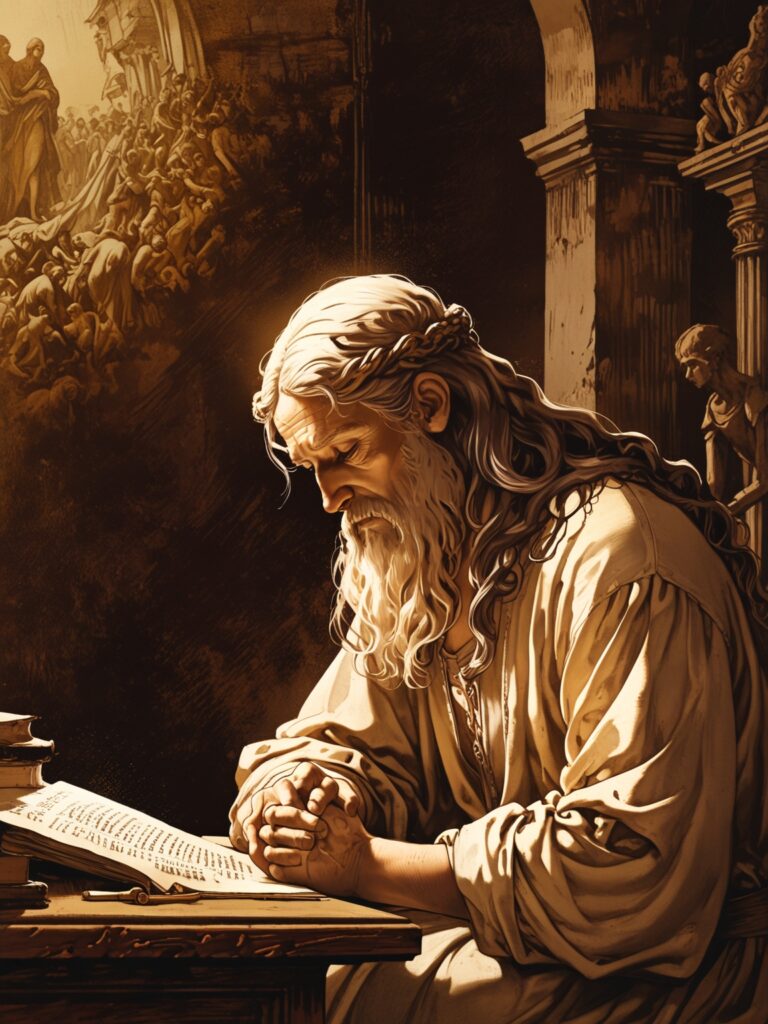
Verse 30 takes us inside Joseph’s heart. He’s “deeply moved at the sight of his brother” (verse 30). The emotions become too much to handle in public. (verse 30): He “hurried out and looked for a place to weep” (verse 30). He seeks privacy (verse 30): “He went into his private room and wept there.” (verse 30) This raw display of emotion reveals the depth of Joseph’s longing for his brother and the years of unresolved pain.
Key Takeaways:
This passage highlights the complex emotions at play. Joseph’s concern for his father and his tender affection for Benjamin stand in contrast to the brothers’ ongoing fear. The reunion, though not yet fully revealed, is a turning point in the story.
What will Joseph do next? Will he reveal his true identity? Join me next time as we explore the dramatic events that unfold!
Genesis 43:31-34 NIV
After he had washed his face, he came out and, controlling himself, said, “Serve the food.”
They served him by himself, the brothers by themselves, and the Egyptians who ate with him by themselves, because Egyptians could not eat with Hebrews, for that is detestable to Egyptians. The men had been seated before him in the order of their ages, from the firstborn to the youngest; and they looked at each other in astonishment. When portions were served to them from Joseph’s table, Benjamin’s portion was five times as much as anyone else’s. So they feasted and drank freely with him.
Genesis 43:31-34 NIV
After an emotional reunion with Benjamin (see previous chapter), Joseph now prepares for a feast. Let’s explore the interesting details in verses 31-34.
Joseph Recovers His Composure (verse 31):
Verse 31 picks up after Joseph’s emotional outburst. He “washed his face” (verse 31), perhaps to regain his composure and hide his tears. He then returns, seemingly in control, and instructs them to “Serve the food.” (verse 31)
A Segregated Feast (verse 32):
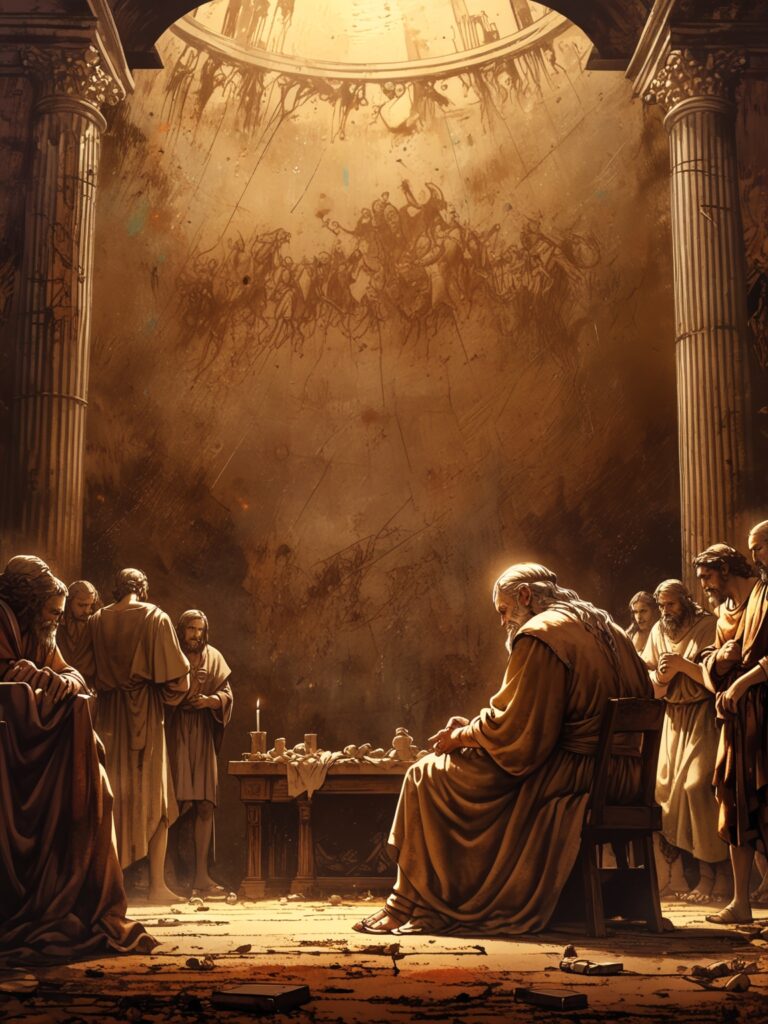
Verse 32 reveals a surprising cultural detail. The “Egyptians… could not eat with Hebrews” (verse 32). This highlights the social and cultural barriers of the time. (verse 32): As a result, the feast is segregated: Joseph dines “by himself” (verse 32), the brothers “by themselves” (verse 32), and the “Egyptians… by themselves” (verse 32).
A Moment of Bewilderment (verse 33):
Verse 33 describes an interesting detail. The brothers are “seated… in the order of their ages” (verse 33). This could be a coincidence or perhaps Joseph’s subtle way of observing them. (verse 33): The text notes their reaction: “they looked at each other in astonishment.” (verse 33) We can only guess at their thoughts – confusion, suspicion, or perhaps a glimmer of recognition?
Favoritism Shown to Benjamin (verse 34):
Verse 34 reveals another interesting detail. Joseph instructs that portions be served “from Joseph’s table” (verse 34). However, Benjamin receives special treatment. His portion is “five times as much as anyone else’s” (verse 34). This act of favoritism could be Joseph’s way of expressing his love for his younger brother without revealing his identity. (verse 34): The chapter concludes with the brothers “feasting and drinking freely with him” (verse 34). This moment of shared enjoyment offers a brief respite from the tension of the situation.
Wrapping Up Genesis 43: A Family on the Brink
Today, we explored Genesis 43, a chapter filled with tension and a glimpse of hope. We saw Jacob reluctantly agree to send Benjamin to Egypt with his brothers, driven by the harsh reality of the famine. The brothers, still fearful of Joseph’s motives, returned with suspicion and trepidation.
Key Takeaways:
- The continuing famine forces Jacob to make a difficult decision.
- Judah takes a courageous stand, promising to guarantee Benjamin’s safety.
- Jacob sends his sons with gifts and instructions to appease the Egyptian official.
This chapter raises questions about trust, forgiveness, and the enduring bonds of family.
Looking for More?
If you’re curious to explore the Bible further, explore Moralisee.com! We offer beautifully AI-generated images alongside our chapter breakdowns, making the stories come alive in a fresh way.
Join the Conversation!
We also encourage you to leave comments and questions below. Let’s explore the Bible together and find meaning for our lives today!


