

Genesis 38:1-5 NIV
At that time, Judah left his brothers and went down to stay with a man of Adullam named Hirah. There Judah met the daughter of a Canaanite man named Shua. He married her and made love to her; she became pregnant and gave birth to a son, who was named Er. She conceived again and gave birth to a son and named him Onan. She gave birth to still another son and named him Shelah. It was at Kezib that she gave birth to him.
Genesis 38:1-5 NIV
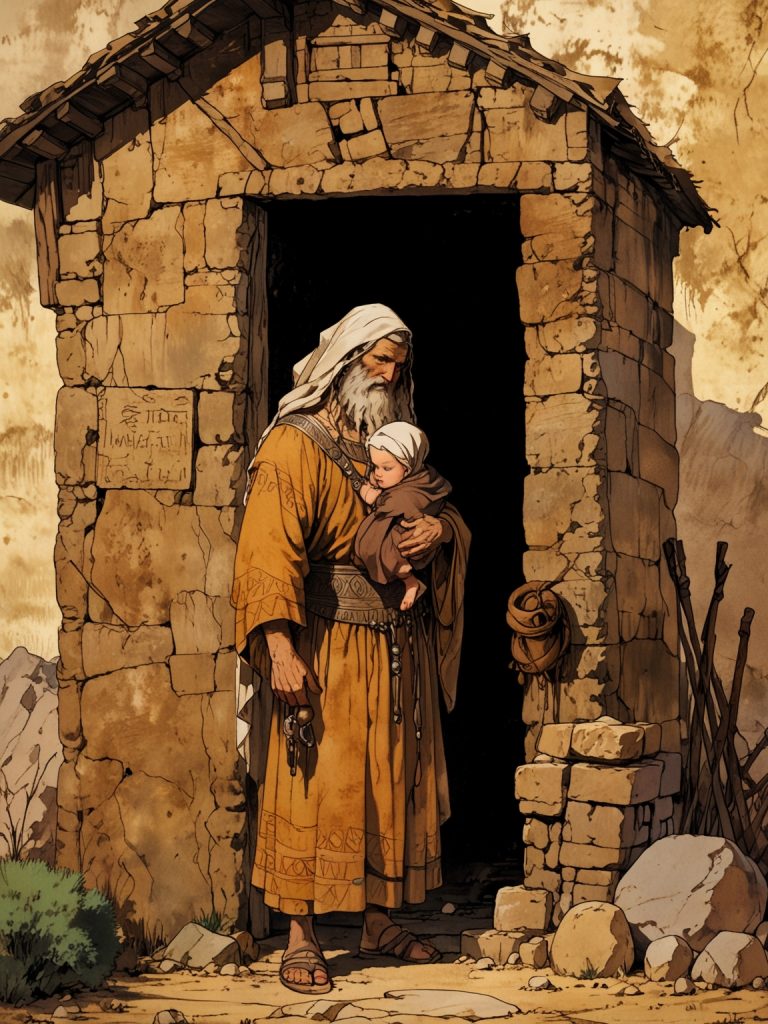
We’re diving into Genesis 38:1-5, a passage that introduces Judah, one of the sons of Jacob, and a turning point in his life. Let’s break it down verse by verse:
Verse 1: “At that time, Judah left his brothers and went down to stay with a man of Adullam named Hirah.”
The passage doesn’t tell us exactly why Judah separates from his brothers. Maybe there was a disagreement, or perhaps he just needed some space. He travels to Adullam, a region known for its caves and considered a less desirable place to live. Here, he stays with a friend named Hirah.
This separation can be a reminder that even within families, there can be times when we need a break. But it’s also important to choose our companions wisely. Hirah, hopefully, was a good influence for Judah during this time.
Verse 2: “There Judah met the daughter of a Canaanite man named Shua. He married her and made love to her;…”
While living in Adullam, Judah meets and marries a Canaanite woman. At this time, the Israelites were instructed to avoid marriage with the Canaanites because of their different religious practices. This decision by Judah foreshadows some of the challenges he’ll face later in the story.
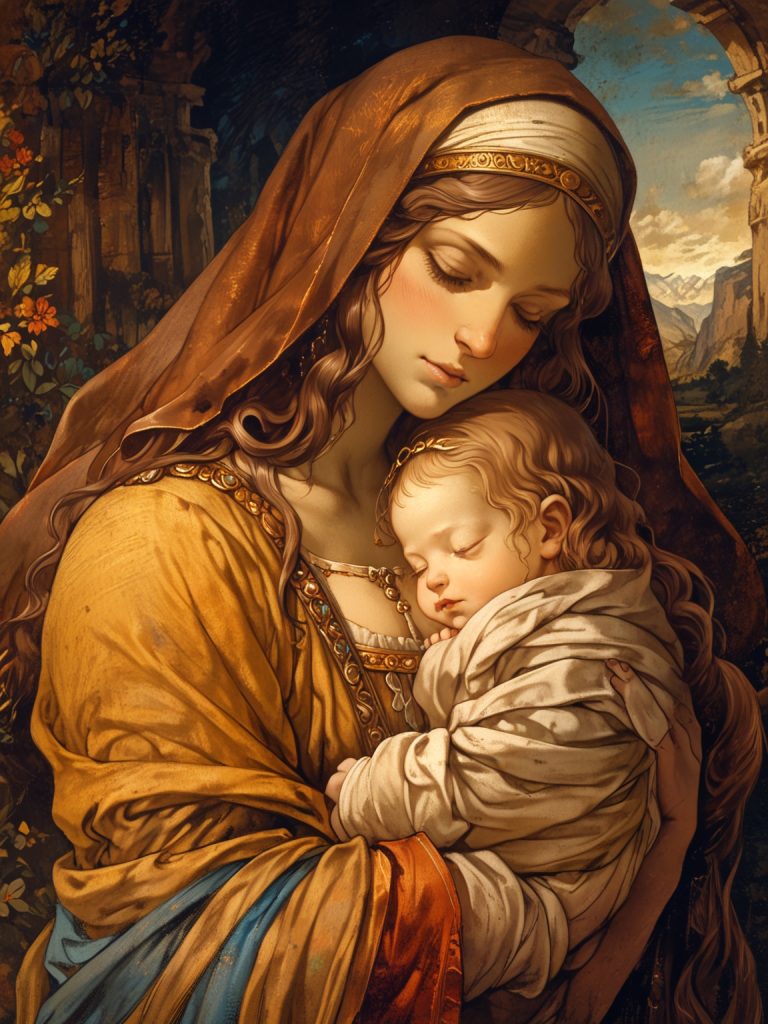
Verse 3: “…she became pregnant and gave birth to a son, who was named Er.”
The passage tells us that Judah and his wife have their firstborn son, Er.
Verse 4: “She conceived again and gave birth to a son and named him Onan.”
The couple then has a second son, Onan.
Verse 5: “She gave birth to still another son and named him Shelah. It was at Kezib that she gave birth to him.”
Finally, they have their third son, Shelah. This verse also mentions the location of Shelah’s birth, Kezib.
These verses focus on the growth of Judah’s family. It’s a reminder of God’s continued blessing, even when we make choices that aren’t ideal.
This passage sets the stage for the rest of Genesis 38, which tells a more complex story about Judah, his sons, and a woman named Tamar. We’ll explore that in more detail below!
Genesis 38:6-10 NIV
Judah got a wife for Er, his firstborn, and her name was Tamar. But Er, Judah’s firstborn, was wicked in the Lord’s sight; so the Lord put him to death.
Then Judah said to Onan, “Sleep with your brother’s wife and fulfill your duty to her as a brother-in-law to raise up offspring for your brother.” But Onan knew that the child would not be his; so whenever he slept with his brother’s wife, he spilled his semen on the ground to keep from providing offspring for his brother. What he did was wicked in the Lord’s sight; so the Lord put him to death also.
Genesis 38:6-10 NIV
Today, we’re picking up where we left off in Genesis 38, diving into verses 6-10. This passage gets a bit more complex, so let’s unpack it together, verse by verse:
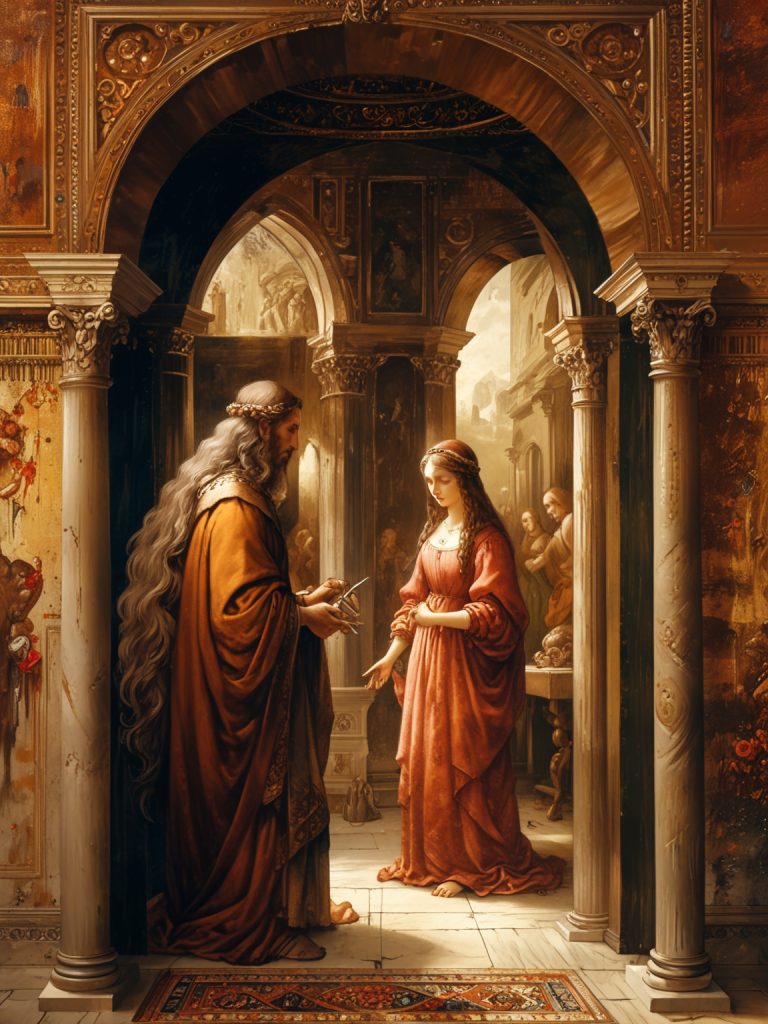
Verse 6: “Judah got a wife for Er, his firstborn, and her name was Tamar.”
We see Judah following a custom of the time. He arranges a marriage for his eldest son, Er, with a woman named Tamar. This was meant to ensure the continuation of the family line.
Verse 7: “But Er, Judah’s firstborn, was wicked in the Lord’s sight; so the Lord put him to death.”
Unfortunately, the passage tells us that Er displeased God and died young. The Bible doesn’t give us specific details about Er’s sin, but it serves as a reminder that God desires us to live according to His principles.
Verse 8: “Then Judah said to Onan, “Sleep with your brother’s wife and fulfill your duty to her as a brother-in-law to raise up offspring for your brother.”
According to the law of the time, if a married man died childless, his brother had a responsibility to marry the widow and have children with her. This practice was called Levirate marriage. Here, Judah asks his second son, Onan, to fulfill this duty with Tamar.
Verse 9: “But Onan knew that the child would not be considered his; so whenever he slept with his brother’s wife, he spilled his semen on the ground to keep from providing offspring for his brother.”
Onan, however, disobeys this law. He engages in a practice called coitus interruptus, where he deliberately avoids impregnating Tamar. His motive seems to be to preserve the inheritance for his own future children. This act is described as wicked in God’s eyes.
Verse 10: “What he did was wicked in the Lord’s sight; so the Lord put him to death also.”
Similar to Er, Onan’s actions displease God, and he too dies young.
This passage raises some tough questions about obedience, responsibility, and the consequences of sin. It’s a reminder that God takes seriously our choices and the importance of following His laws.
Important to Remember:
- Levirate marriage was a specific custom of the time and is not practiced today.
- The passage condemns the actions of both Er and Onan, highlighting the importance of obedience and fulfilling obligations.
Genesis 38:11-14 NIV
Judah then said to his daughter-in-law Tamar, “Live as a widow in your father’s household until my son Shelah grows up.” For he thought, “He may die too, just like his brothers.” So Tamar went to live in her father’s household.
After a long time Judah’s wife, the daughter of Shua, died. When Judah had recovered from his grief, he went up to Timnah, to the men who were shearing his sheep, and his friend Hirah the Adullamite went with him.
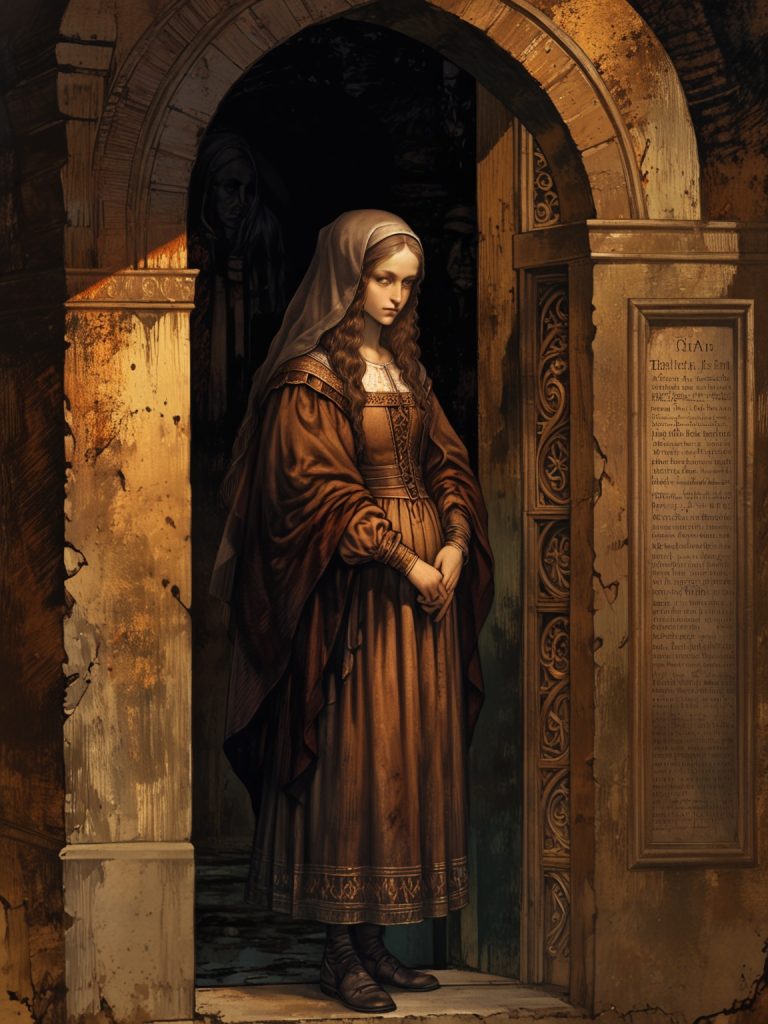
When Tamar was told, “Your father-in-law is on his way to Timnah to shear his sheep,” she took off her widow’s clothes, covered herself with a veil to disguise herself, and then sat down at the entrance to Enaim, which is on the road to Timnah. For she saw that, though Shelah had now grown up, she had not been given to him as his wife.
Genesis 38:11-14 NIV
Let’s break down this passage from Genesis 38, verse by verse, and explore its meaning together.
Verse 11:
“Judah then said to his daughter-in-law Tamar, ‘Live as a widow in your father’s household until my son Shelah grows up.’ For he thought, ‘He may die too, just like his brothers.’ So Tamar went to live in her father’s household.”
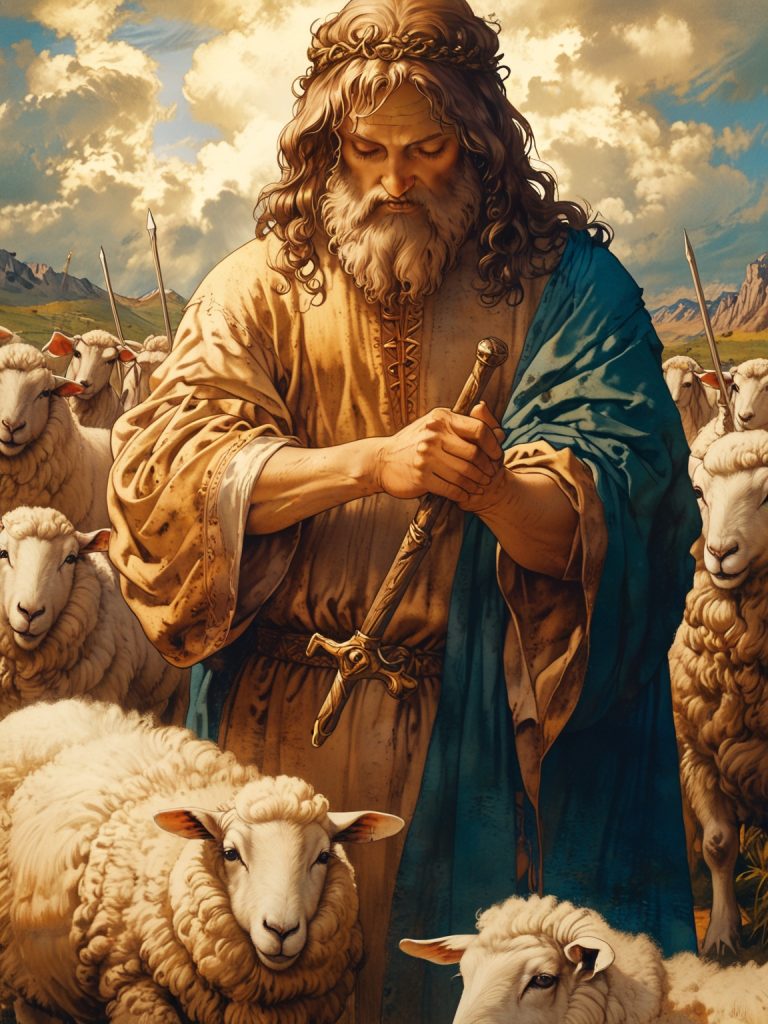
Here, Judah is concerned for his youngest son, Shelah, because his older sons, Er and Onan, have both died after marrying Tamar. Judah instructs Tamar to return to her father’s house and live as a widow until Shelah is old enough to marry her. But deep down, Judah is fearful that Shelah might also die if he marries Tamar, so he’s hesitant to fulfill this duty. This verse shows Judah’s protective, though somewhat superstitious, mindset. It also highlights the vulnerable position of Tamar, who obediently follows Judah’s command, despite the uncertainty of her future.
Verse 12:
“After a long time Judah’s wife, the daughter of Shua, died. When Judah had recovered from his grief, he went up to Timnah, to the men who were shearing his sheep, and his friend Hirah the Adullamite went with him.”
Time passes, and Judah’s wife dies, marking another significant loss in his life. Once Judah recovers from his mourning, he resumes his duties and travels to Timnah to oversee the shearing of his sheep—a routine task that reflects his return to everyday life. His friend Hirah accompanies him, providing support during this time. This verse shows us that life moves forward, even after deep personal loss, and Judah is beginning to engage with the world again.
Verse 13:
“When Tamar was told, ‘Your father-in-law is on his way to Timnah to shear his sheep,'”
Tamar hears of Judah’s plans to travel to Timnah. This news sparks something in her—she realizes that despite the passage of time, Judah has not kept his promise to give her Shelah as a husband. Tamar has been waiting patiently, but now she sees an opportunity to take action. This verse sets the stage for Tamar’s decision to act in a way that will secure her future and her rightful place in the family.

Verse 14:
“She took off her widow’s clothes, covered herself with a veil to disguise herself, and then sat down at the entrance to Enaim, which is on the road to Timnah. For she saw that, though Shelah had now grown up, she had not been given to him as his wife.”
Tamar’s actions here are bold and deliberate. By removing her widow’s garments and covering herself with a veil, she is taking control of her situation. The veil symbolizes both her disguise and her determination to change her destiny. Tamar chooses to sit at the entrance of Enaim, a strategic location where she knows Judah will pass by. This act is not just about deceiving Judah; it’s about reclaiming her place in the family and ensuring her future. Tamar’s courage and resourcefulness are evident in this verse, as she decides to challenge the unfairness she has experienced.
Genesis 38:15-19 NIV
When Judah saw her, he thought she was a prostitute, for she had covered her face. Not realizing that she was his daughter-in-law, he went over to her by the roadside and said, “Come now, let me sleep with you.”
“And what will you give me to sleep with you?” she asked.
“I’ll send you a young goat from my flock,” he said.
“Will you give me something as a pledge until you send it?” she asked.
He said, “What pledge should I give you?”
“Your seal and its cord, and the staff in your hand,” she answered. So he gave them to her and slept with her, and she became pregnant by him. After she left, she took off her veil and put on her widow’s clothes again.
Genesis 38:15-19 NIV
Genesis 38 takes another turn with verses 11-19. Let’s break it down, verse by verse:
Verse 15: “When Judah saw her, he thought she was a prostitute, for she had covered her face.”
Judah arrives and mistakes Tamar for a prostitute due to her veil. Prostitution was a reality in the ancient world, and sadly, Judah seems more concerned with his own pleasure than recognizing the woman before him.
Verse 16: “Not realizing that she was his daughter-in-law, he went over to her by the roadside and said, “Come now, let me sleep with you.”
Judah propositions Tamar, completely unaware of her identity.
Verse 17:
“‘And what will you give me to sleep with you?’ she asked.
‘I’ll send you a young goat from my flock,’ he said.”
Tamar, playing along with Judah’s misunderstanding, asks what he will give her in exchange for the encounter. Judah offers her a young goat, a valuable commodity in those times, as payment. This exchange highlights the transactional nature of the interaction, but also Tamar’s strategic thinking. She is setting the stage for something much more significant than a mere transaction.
Verse 18:
“‘Will you give me something as a pledge until you send it?’ she asked.
He said, ‘What pledge should I give you?’
‘Your seal and its cord, and the staff in your hand,’ she answered. So he gave them to her and slept with her, and she became pregnant by him.”
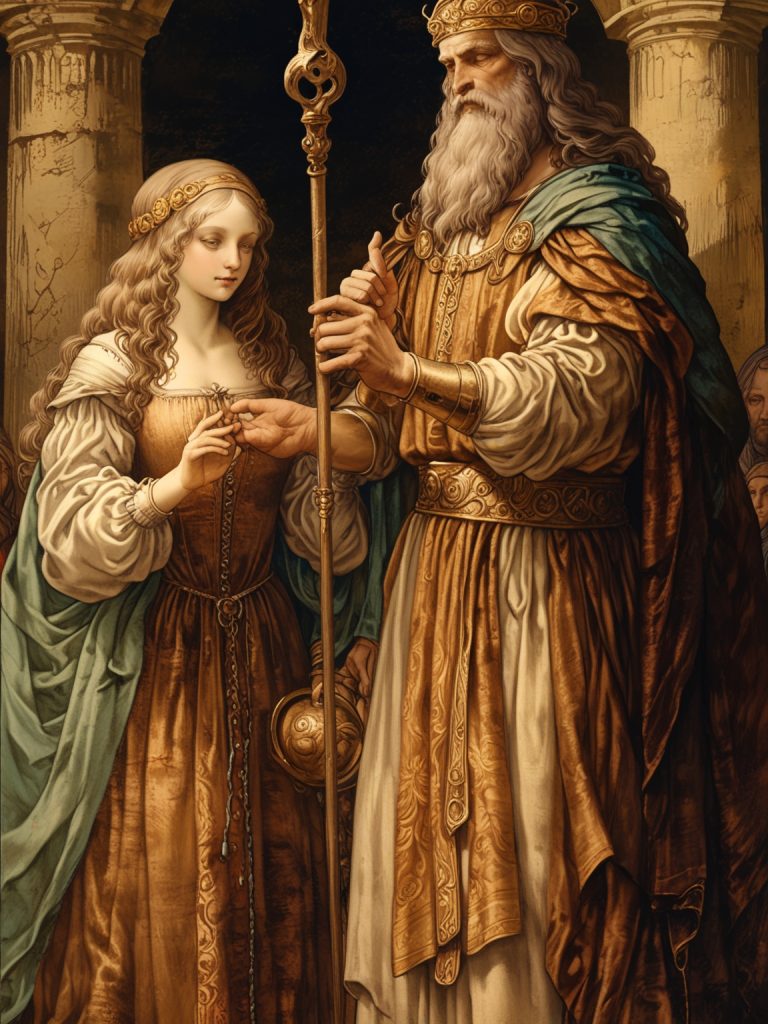
Tamar asks Judah for a pledge—something to hold onto until he can deliver the goat. Judah agrees and gives her his seal, cord, and staff—items that are personal and significant, almost like leaving behind his identity or authority. Tamar’s request is not random; she is ensuring that she has undeniable proof of this encounter. The fact that she becomes pregnant by Judah is a turning point in the story, showing that her actions were purposeful and part of a larger plan to secure her place in Judah’s family.
Verse 19:
“After she left, she took off her veil and put on her widow’s clothes again.”
After the encounter, Tamar removes her disguise and returns to her widow’s garments, resuming her previous appearance. This act of changing clothes symbolizes Tamar’s ability to adapt and navigate the complex social and familial expectations placed upon her. By returning to her widow’s clothes, she also protects herself from suspicion, allowing her to carry out her plan without drawing unnecessary attention.
Next Time: We’ll explore the surprising bargain Tamar strikes with Judah and the consequences of their encounter.
Important to Remember:
- This passage doesn’t portray Judah’s actions in a positive light.
- Tamar’s situation is one of desperation and a desire to secure her future.
Genesis 38:20-30 NIV
Meanwhile Judah sent the young goat by his friend the Adullamite in order to get his pledge back from the woman, but he did not find her. He asked the men who lived there, “Where is the shrine prostitute who was beside the road at Enaim?”
“There hasn’t been any shrine prostitute here,” they said.
So he went back to Judah and said, “I didn’t find her. Besides, the men who lived there said, ‘There hasn’t been any shrine prostitute here.’ ”
Then Judah said, “Let her keep what she has, or we will become a laughingstock. After all, I did send her this young goat, but you didn’t find her.”
About three months later Judah was told, “Your daughter-in-law Tamar is guilty of prostitution, and as a result she is now pregnant.”
Judah said, “Bring her out and have her burned to death!”
As she was being brought out, she sent a message to her father-in-law. “I am pregnant by the man who owns these,” she said. And she added, “See if you recognize whose seal and cord and staff these are.”
Judah recognized them and said, “She is more righteous than I, since I wouldn’t give her to my son Shelah.” And he did not sleep with her again.
When the time came for her to give birth, there were twin boys in her womb. As she was giving birth, one of them put out his hand; so the midwife took a scarlet thread and tied it on his wrist and said, “This one came out first.” But when he drew back his hand, his brother came out, and she said, “So this is how you have broken out!” And he was named Perez. Then his brother, who had the scarlet thread on his wrist, came out. And he was named Zerah.
Genesis 38:20-30 NIV
Things get dramatic in Genesis 38:20-30. Let’s unpack the aftermath of Judah and Tamar’s encounter:
Let’s walk through this passage from Genesis 38 together, verse by verse, to see what it reveals to us.


Verse 20:
“Meanwhile Judah sent the young goat by his friend the Adullamite in order to get his pledge back from the woman, but he did not find her.”
Judah is trying to fulfill his promise by sending the young goat to the woman he thinks is a prostitute, through his friend the Adullamite. This verse shows us that Judah wants to honor his word, but things don’t go as planned. The woman, who we know is Tamar, is nowhere to be found. This sets the stage for the unfolding drama and highlights how Judah’s attempts to cover his tracks are thwarted.
Verse 21:
“He asked the men who lived there, ‘Where is the shrine prostitute who was beside the road at Enaim?’ ‘There hasn’t been any shrine prostitute here,’ they said.”
Judah’s friend inquires about the woman, but the locals deny that any shrine prostitute was present. This verse emphasizes how Tamar’s actions were calculated and clever; she ensured that no one could link her to that identity. It also illustrates how Judah’s assumptions were based on appearances, not reality.
Verse 22:
“So he went back to Judah and said, ‘I didn’t find her. Besides, the men who lived there said, ‘There hasn’t been any shrine prostitute here.’ ”
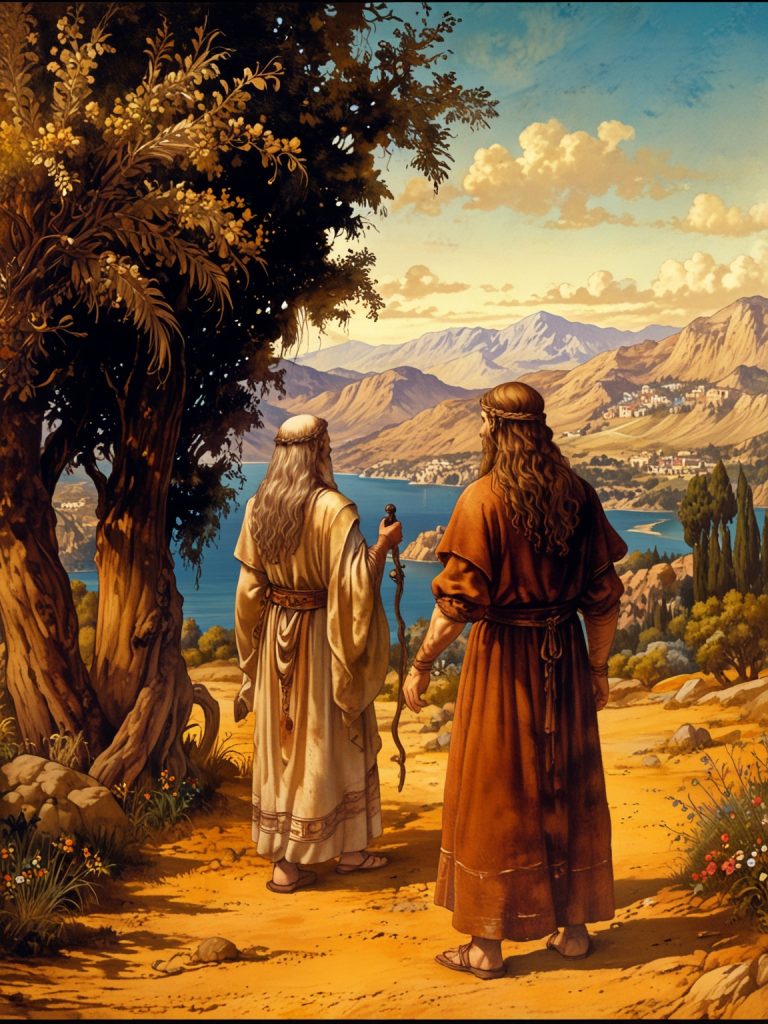
Judah’s friend returns with the troubling news that the woman cannot be found, and the locals are unaware of any shrine prostitute. This adds to the tension and confusion, as Judah realizes that the situation is slipping out of his control.
Verse 23:
“Then Judah said, ‘Let her keep what she has, or we will become a laughingstock. After all, I did send her this young goat, but you didn’t find her.’”
Judah decides to drop the matter, allowing Tamar to keep the seal, cord, and staff. He fears that pursuing it further would lead to embarrassment and public ridicule. This verse shows Judah’s concern for his reputation, prioritizing it over the recovery of his personal items. It’s a reminder of how often we may choose to cover our mistakes to avoid shame, rather than confronting them openly.
Verse 24:
“About three months later Judah was told, ‘Your daughter-in-law Tamar is guilty of prostitution, and as a result she is now pregnant.’ Judah said, ‘Bring her out and have her burned to death!’”
Three months later, Judah learns that Tamar is pregnant and assumes she has committed prostitution. Without hesitation, he orders a harsh punishment—death by burning. This verse is a powerful example of hypocrisy, as Judah is quick to condemn Tamar for a sin that he himself was complicit in. It challenges us to reflect on how we might judge others harshly for the very things we ourselves have done wrong.
Verse 25:
“As she was being brought out, she sent a message to her father-in-law. ‘I am pregnant by the man who owns these,’ she said. And she added, ‘See if you recognize whose seal and cord and staff these are.’”
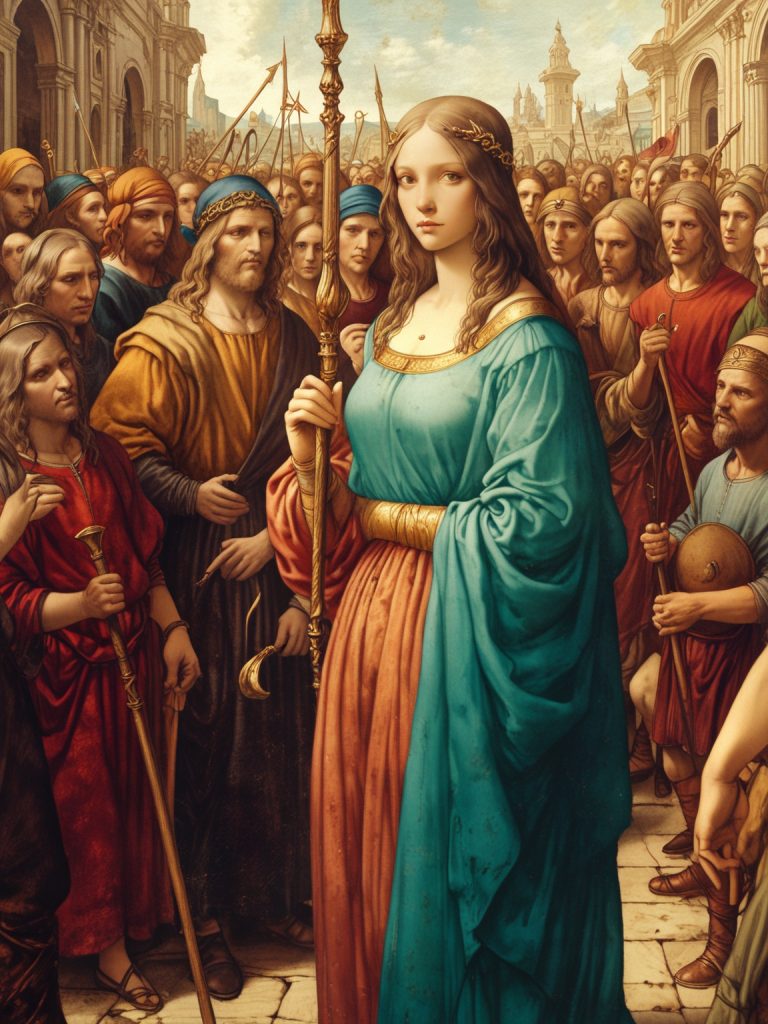
As Tamar is about to face her punishment, she reveals the identity of the father by producing Judah’s seal, cord, and staff. This moment is a dramatic turning point, as Tamar cleverly exposes Judah’s hypocrisy. It teaches us about the importance of truth and justice, and how our sins can come back to confront us in unexpected ways.
Verse 26:
“Judah recognized them and said, ‘She is more righteous than I, since I wouldn’t give her to my son Shelah.’ And he did not sleep with her again.”
Judah immediately recognizes his belongings and admits that Tamar is more righteous than he is. He acknowledges his failure to fulfill his duty to her by not giving her to his son Shelah. This verse shows Judah’s moment of repentance and realization. It’s a powerful reminder that acknowledging our wrongs is the first step toward making things right.
Verse 27:
“When the time came for her to give birth, there were twin boys in her womb.”
As Tamar’s pregnancy progresses, she gives birth to twins. This verse signals the continuation of Judah’s lineage through Tamar, showing that God’s plans often unfold in unexpected ways.
Verse 28:
“As she was giving birth, one of them put out his hand; so the midwife took a scarlet thread and tied it on his wrist and said, ‘This one came out first.’”
The midwife ties a scarlet thread on the hand of the first baby to emerge, marking him as the firstborn. This act of marking the child is a symbolic gesture, representing the importance of birthright and order. However, the unexpected twist in the next verse shows that God’s plans are not bound by human customs.
Verse 29:
“But when he drew back his hand, his brother came out, and she said, ‘So this is how you have broken out!’ And he was named Perez.”
The first baby pulls his hand back, and the second baby, Perez, is born first instead. The name Perez, meaning “breakthrough,” reflects the surprising turn of events. This verse shows that even in birth, God’s plans can break through in ways we don’t anticipate.
Verse 30:
“Then his brother, who had the scarlet thread on his wrist, came out. And he was named Zerah.”
Finally, the first baby with the scarlet thread, Zerah, is born. The naming of the twins, Perez and Zerah, marks the conclusion of this chapter, emphasizing that God’s purposes are fulfilled even through complicated and unexpected circumstances.
This passage is a profound lesson in humility, justice, and the sovereignty of God. It shows us that God can use even our mistakes and failures to bring about His plans. It also calls us to examine our own hearts, to ensure we are not quick to judge others, but are instead willing to acknowledge our own shortcomings.
Alright, friends, that brings us to the end of Genesis 38! It’s been a wild ride, filled with unexpected twists and turns. We’ve seen Judah grapple with loss, make some questionable choices, and ultimately face the consequences of his actions. Tamar’s story, though unconventional, highlights her courage and resourcefulness in a difficult situation.
Through it all, this passage reminds us that God’s plan can unfold even amidst human flaws and failures. Tamar’s actions, while not ideal, ultimately lead to the continuation of Judah’s bloodline, a line that will one day lead to the Messiah.
Genesis 38 is a story that leaves us with a lot to ponder. What are your thoughts on the characters’ actions and motivations? How does this story connect to the broader themes of the Bible?
If you’d like to delve deeper into the Bible, explore Moralisee.com! We have chapters filled with beautifully AI-generated images to help you visualize the stories and gain a new perspective. We also have a vibrant online community where you can discuss your thoughts and learnings with others.
So don’t wait, come explore the Bible with us at Moralisee.com! May God bless you on your journey of faith!


